
Rat activity after treatment: what should be reported?

Seeing a rat or hearing movement after a treatment visit can be unsettling. It is worth reporting, but the observation needs context before anyone can say whether the plan has failed or whether activity is changing as expected. Treatment methods, access and the extent of an infestation differ between properties. The provider who inspected the site is best placed to explain the agreed monitoring period and what should happen next. If you are still planning the first visit, our preparation guide for rat treatment explains which access details to have ready.
Keep the original visit notes and a simple dated record. Do not alter treatment equipment or add your own bait in response to one sighting. Doing so can compromise the plan and make later observations harder to interpret. A clear report of where, when and how the animal was seen gives the provider something practical to investigate.
Distinguish a sighting from a conclusion
Write down the exact room or outside location, approximate time, direction of movement and whether you saw the animal clearly. Note if the observation was from a window, a camera or another person. “One animal crossed the patio towards the bins at 21:10” is useful; “the treatment has not worked” is an interpretation. The technician can compare the observation with the original site map and treatment locations.
Sounds, droppings and gnawing are also worth logging, but do not assume every sign was created after the visit. Material may have been hidden before or can be moved during cleaning. If a surface was cleaned on a known date and similar material later reappeared, record that sequence. Avoid dry sweeping or vacuuming suspected waste while gathering evidence.
An outside sighting may involve the same route, a neighbouring source or ordinary movement through the area. An indoor sighting in a previously unaffected room may call for a different response. Describe the facts promptly and ask the provider how they affect the plan. No fixed number of days can substitute for the site-specific follow-up agreed at the visit.
What a useful follow-up report contains
Send photographs that show both the sign and its location. A wide view of a cupboard, wall or garden edge helps the technician find the place, while a close-up may show detail. Include the date and whether someone had moved furniture, cleaned or repaired a gap beforehand. If you have a short video, note where the camera was positioned; a clip without context can be misleading.
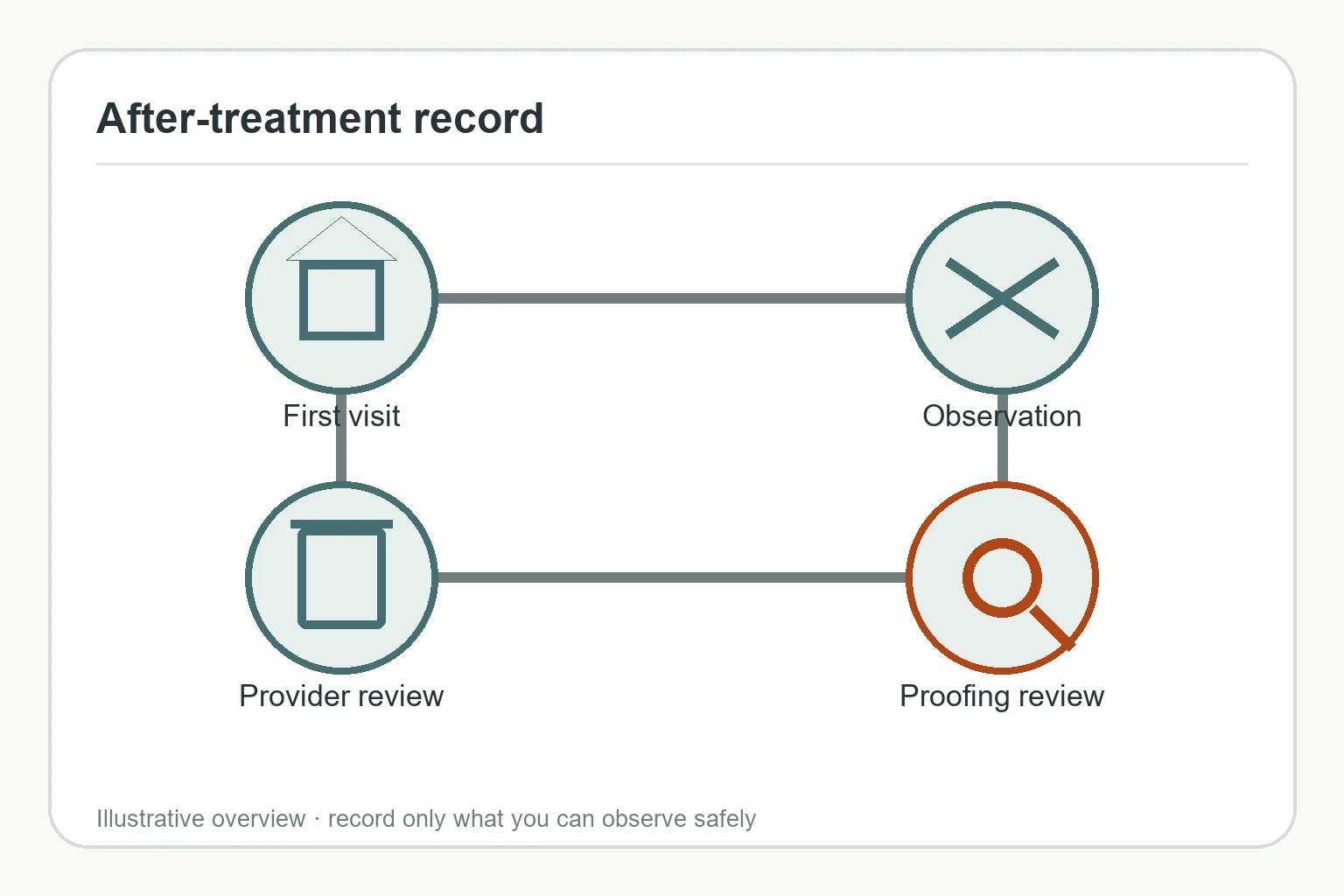
Mention any change in food, waste or water conditions. Was a bin lid repaired, a leak fixed or a food store moved? Such changes may affect activity. Also report whether access was unavailable at the first visit, such as a locked service cupboard or an unboarded loft. A follow-up may need to inspect a space that was previously inaccessible rather than repeat the same check in the same rooms.
Do not send dozens of near-identical images without a summary. A short note with three or four observations in date order is easier to evaluate. The existing guide on recognising pest signs before they spread gives broad context; an aftercare report should be specific to the treatment plan and the changes since it began.
When to contact the provider
Follow the return-contact instructions supplied with the treatment. If you have a clear new indoor sighting, repeated activity in a food area, damaged wiring or a safety concern involving equipment, contact the provider promptly and explain the evidence. Damaged electrical wiring also needs a qualified electrician; pest work does not make it safe to use. If a pet or child may have contacted treatment material, follow the product-specific emergency advice and seek appropriate medical or veterinary help.
For ordinary follow-up observations, use the agreed channel and appointment schedule. The rat-control service can explain how its team reviews activity and plans further work. If the original visit was arranged urgently, do not assume every later noise requires another emergency call, but describe any immediate risk clearly when asking about emergency pest-control availability.
Ask what the new observation changes. The answer may be to inspect another route, adjust monitoring or continue the agreed period. A provider should be able to explain the reasoning and the limits of what was observed. A confident promise of complete removal on a fixed date is less useful than a documented plan with criteria for review.
Keep treatment equipment undisturbed
Do not move, open or supplement professional bait stations or monitoring devices. Their placement, security and checking schedule form part of the treatment. Moving one to where you recently saw an animal may expose others or make results impossible to compare. Tell the technician if a device is damaged, displaced or accessible to a child or pet, and keep people away from it until advice is given.
Avoid adding household poison, sticky traps or improvised devices in another room. These may create new risks and complicate identification of what worked. Ask the provider before making major cleaning or building changes around an active route. Ordinary food storage and bin management can continue, but proofing needs a sequence if it might seal animals into a void.
Where a dead animal or extensive waste is found, do not handle it casually. Ask for safe removal and cleaning instructions appropriate to the location. A concealed animal in a wall or loft may require planned access. Masking an odour or closing a gap does not resolve the underlying issue.
Proofing and repairs after treatment
If activity persists near the same opening, ask whether the route was confirmed and whether it can be closed safely yet. The site's pest-proofing service may be appropriate once the treatment and monitoring indicate the timing is right. A separate drain, roof or structural defect may need another contractor. Clarify who will coordinate repairs and how the route will be checked afterwards.
Do not judge a repair solely by whether it looks neat. A blocked opening can be bypassed if another gap or shared service route remains. The technician should consider the broader building, especially in terraces and blocks with connected voids. Ask what was inspected, what was not accessible and what evidence would justify further investigation.
If activity appears in a neighbour's or communal area, report it through the responsible person with dates. Avoid attributing the source without inspection. The treatment plan may need access across more than one unit, but that should be arranged with appropriate permissions.
Decide when the case can be closed
The provider should explain what a satisfactory follow-up looks like for this property. It may involve checks of devices, no new signs in previously active areas and completed route repairs. The absence of one night's noise is not proof of success, and an old pellet uncovered during later cleaning is not necessarily new activity. Dates and known cleaning or repair events help make the distinction.
Save the final report and photographs. They can guide future maintenance and help a new occupant or manager understand what was done without repeating uncertain stories about the property. If the provider leaves recommendations, assign responsibility and a date for them rather than treating the treatment visit as the whole job.
Report observations promptly, describe them precisely and let the technician compare them with the original plan. This is the practical way to respond to rat activity after treatment: neither ignore new evidence nor declare failure from one ambiguous sign.