
Preparing for a professional rat treatment visit
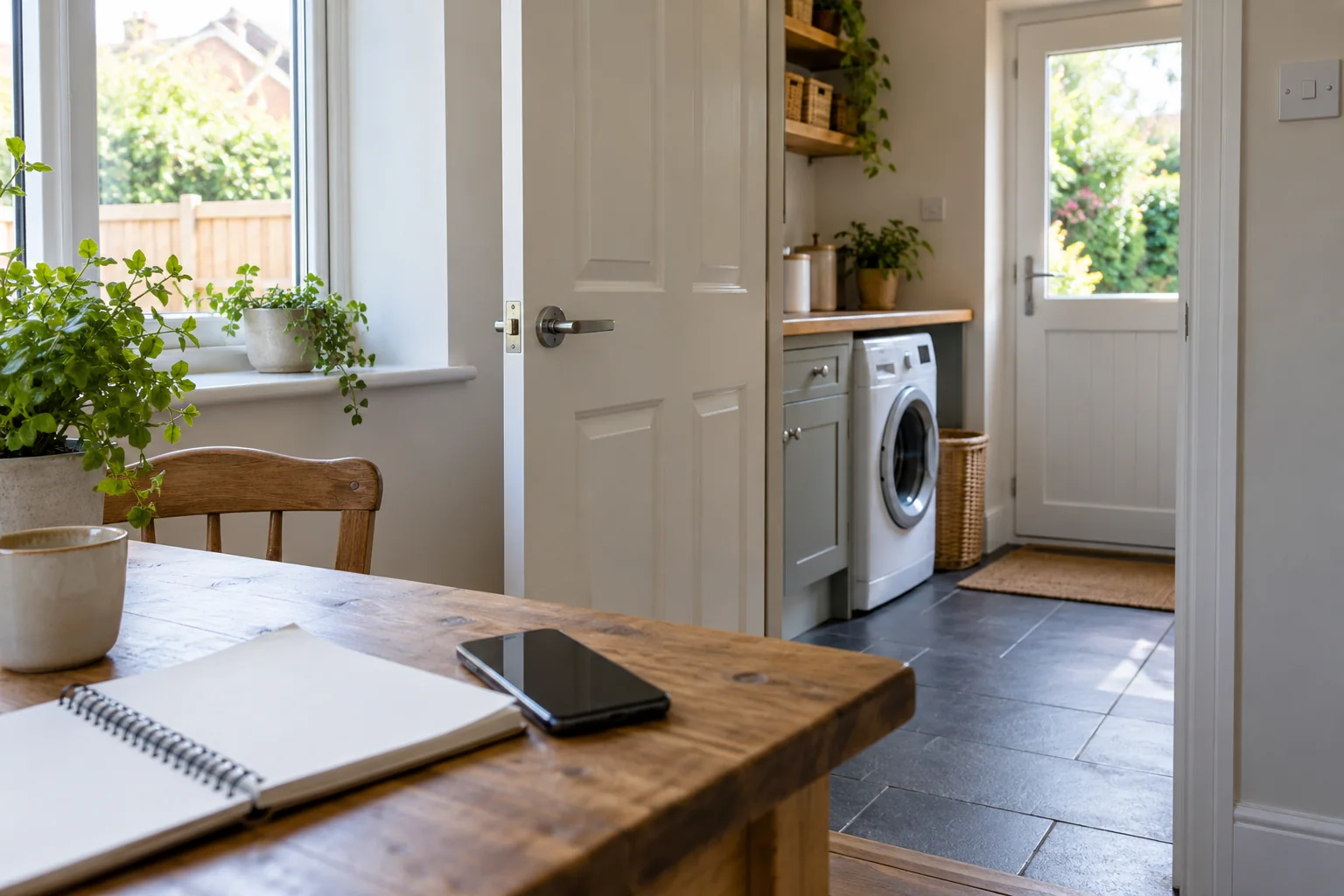
Preparing for rat treatment begins with understanding what the first visit will involve. A provider may need to identify the animal, inspect activity and entry routes, agree a treatment plan and explain follow-up before any treatment is placed. The exact preparation depends on the property and the chosen method. A sensible household plan is to make relevant areas accessible, keep a short record of signs and ask for site-specific instructions rather than rearranging the whole home in advance. Before the appointment, use our rat inspection record guide to organise sightings and access notes.
When booking, describe the problem in concrete terms: a rat seen in the garden, waste found in a cupboard, sounds in the loft or activity around bins. Mention children, pets and any access restrictions. Ask whether the appointment is an inspection, a treatment visit or both. This prevents you from expecting equipment or repairs that the provider has not yet agreed to supply.
Keep a useful record of what happened
Gather sighting dates, rooms, photographs and notes about repeated signs. A short timeline helps the technician judge whether the evidence is current and which places to inspect first. If you found material that may be rodent waste, photograph it from a safe distance rather than collecting a sample. Do not dry sweep or vacuum suspected waste to make the space appear tidy.
Write down any earlier pest work and the date it took place. If you know what was used or where a device remains, share that information. Do not move, open or reset professional equipment on your own. Also mention recent repairs, drain problems or building work if they might affect access. These facts are context, not proof of a cause.
An existing article on broader rodent prevention can help with general household habits. For the appointment itself, the most valuable material is specific: where and when this property showed evidence, what has already been tried and what the technician can reach safely.
Make the relevant areas accessible
Clear ordinary clutter from the routes to affected rooms, the outside bin area and any existing service or loft access. This does not mean emptying every cupboard. If signs were found behind a kitchen kickboard or heavy appliance, ask the provider what access they need and whether a separate tradesperson should remove fittings. Do not strain to move a fridge or dismantle built-in furniture simply to be ready.
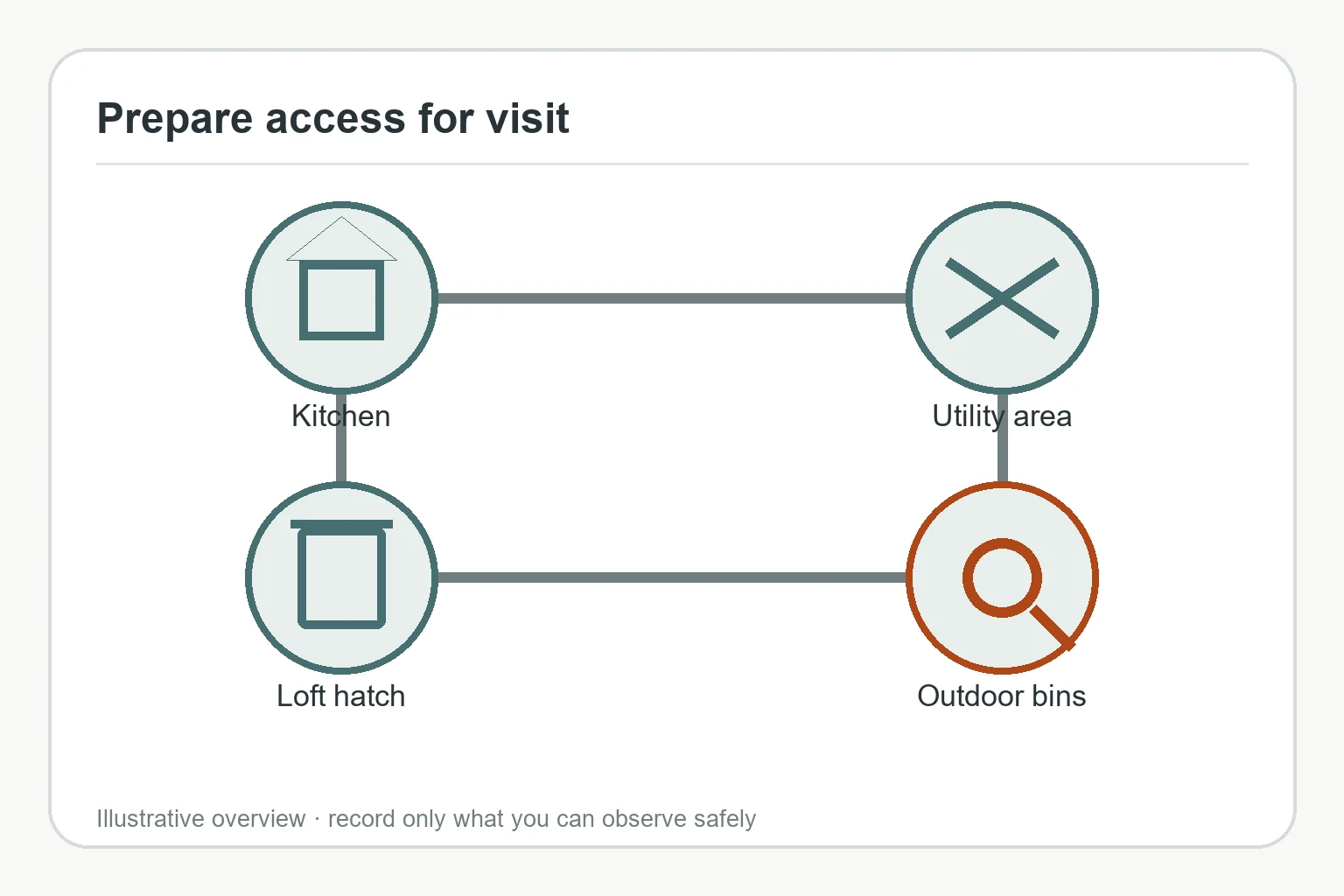
Keep children and pets away from the working area during the visit as instructed. Tell the provider about pet food, feeding stations, play areas and any animals that use the garden. This helps them explain how equipment or materials will be kept secure if treatment is proposed. Do not assume that moving a pet into another room is sufficient for every method; follow the specific instructions supplied for the site.
If the property is rented or shared, arrange keys and permissions before the appointment. A technician may need access to a communal bin store, service cupboard or garden boundary. Without that access the visit may still be useful, but its findings will be limited. Tell the provider in advance which areas are unavailable rather than leaving the discovery until arrival.
Protect food without erasing evidence
Put sound food in closed containers and separate anything visibly contaminated. If packaging has been gnawed or touched by suspect waste, do not return it to normal storage. Ask for cleaning advice appropriate to the surface and extent of contamination. A visible food source should not be left accessible, but an inspector may still need photographs showing where damage occurred before the area is cleared.
Ordinary crumbs and spillages can be cleaned from unaffected surfaces. Keep bin lids shut and remove accessible food waste. Avoid pulling apart a suspected nest or moving waste through the house to make a room presentable. A professional can tell you what cleaning should happen before or after treatment and whether specialist work is needed. That sequence is especially important in a food business or a heavily contaminated void.
Water sources such as an accessible leaking tap can also be reported. If a plumbing defect needs repair, arrange the appropriate trade; pest treatment alone will not fix it. Likewise, do not seal every visible gap immediately before inspection. The technician should first identify active routes and advise when proofing belongs in the plan.
Ask about the proposed method and safety
The provider should explain why a particular approach suits the evidence, where any devices will be placed and how they will be secured and checked. Ask what you and other occupants must avoid touching. Request clear guidance for pets and children, including outdoor areas. If you have concerns about a treatment material, raise them before work starts so the technician can explain the options and limitations.
When arranging professional rat control, ask whether the quoted visit includes identification, accessible route inspection and a written plan. Clarify follow-up visits, monitoring and any separate proofing or building repairs. A quote should state its scope rather than imply that every possible opening and contamination issue is covered.
If a rat is inside an occupied room or the situation is time-sensitive, describe the facts when asking about emergency pest-control availability. The team can say whether an urgent visit is possible and what preparation is practical. Do not use a service label as a substitute for explaining the actual risk and access conditions.
Understand the role of proofing
Closing entry points can be important, but timing depends on activity. Sealing a route while animals still use a concealed void may redirect them or make retrieval difficult. Ask the technician which openings are confirmed, which are only suspected and what should happen before closure. The site's pest-proofing service may be relevant once the route and sequence are clear.
Some work may need a roofer, builder, plumber or drainage contractor. Ask who will coordinate those steps and whether temporary access must remain for monitoring. A patch at one pipe opening may not address a broken drain or roof defect. Treat the inspection findings as a site-specific plan rather than applying a generic list of materials.
Know what happens after the visit
Before the technician leaves, ask what was actually found, what remains uncertain and what you should monitor. Make a note of any device locations you need to avoid, the date of the next check and whom to contact if there is a new sighting. Do not disturb equipment to see whether it is working. If waste or a dead animal needs handling, ask for instructions rather than improvising.
Keep a dated log after treatment, including where activity appears and whether the area had been cleaned or repaired. One quiet night is not a complete outcome; one later sound is not automatically failure. Monitoring and follow-up should be interpreted in the context of the original evidence and the technician's plan.
Preparation is therefore modest but precise: share a factual record, make relevant spaces reachable, protect food and occupants, and agree safety and follow-up before treatment. This gives the professional enough information to work without asking you to dismantle the home or make uncertain treatment decisions yourself.