
How mice reach a kitchen through service gaps
Kitchen cabinets often hide pipes, cables and uneven wall edges. The openings around these services can connect a cupboard to spaces that are difficult to see. If mice have been identified in a kitchen, those connections deserve an inspection. A gap alone does not prove that a mouse uses it, and the biggest visible opening is not always the active route. Good proofing starts by mapping the evidence and understanding which voids join together. When waste appears inside storage, start with our guide to droppings in kitchen cupboards before tracing nearby access.
The safe household role is to photograph accessible openings, note where signs appear and avoid sealing a suspected route prematurely. Do not reach into a wall cavity or move a heavy appliance to confirm your theory. A technician can assess activity, decide which spaces need access and explain the right sequence for treatment and repairs.
Look at the edges of accessible cabinets
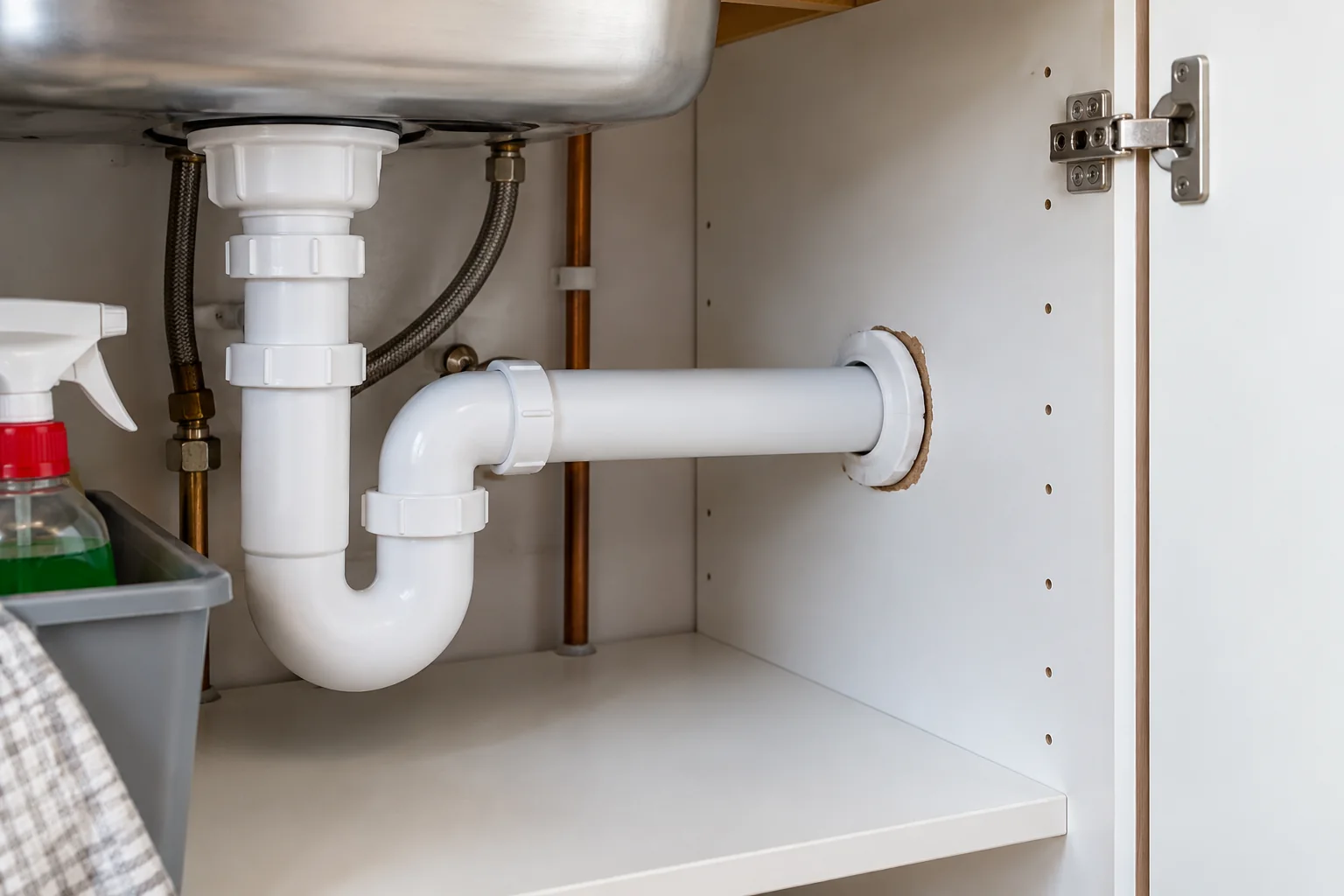
Open the cupboard under the sink and inspect from the normal standing position. Note where supply and waste pipes pass through the back or base. Look at corners, shelf supports and the junction between cabinet and wall. Photograph the whole cabinet, then any visible opening. A close-up without context may make a technician wonder which pipe or room it shows.
Next, consider nearby cabinets, the plinth and the space beside fixed appliances. Do not detach panels merely for a photograph. If a plinth is loose or a panel is designed for access, ask the provider whether it should be opened during the visit. Electrical, gas and plumbing connections make unplanned removal risky.
An opening may have been left during installation yet never used by pests. What makes it more relevant is associated evidence: repeated droppings, gnawed packaging, a sighting that ends at the gap or marks along a nearby edge. Record each observation separately. The older home mouse-proofing guide covers general household routes; this inspection is specifically about how kitchen service spaces connect.
Understand why one hole may lead to several cupboards
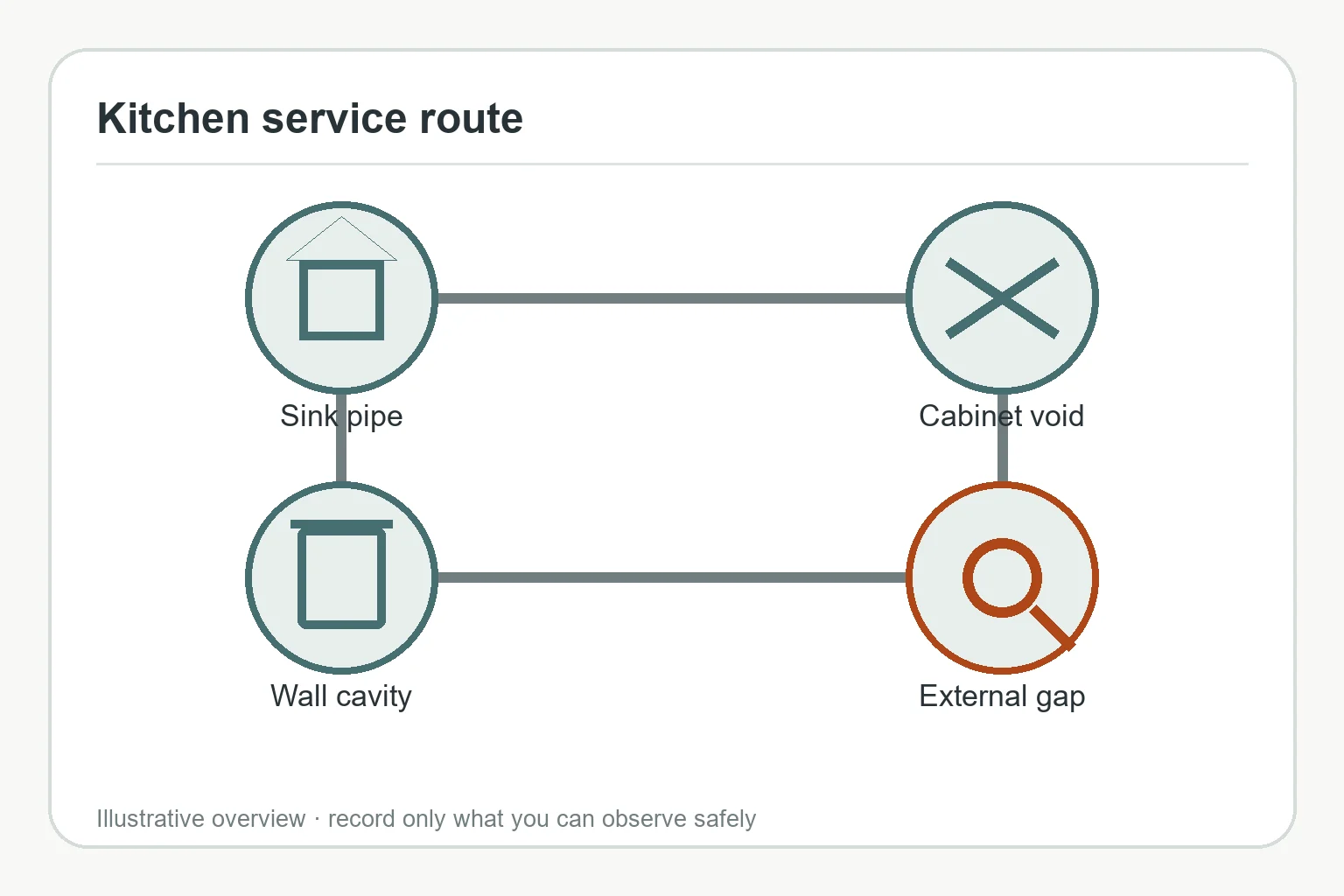
Cabinets can sit against a common wall cavity, while pipe boxing can run vertically or between rooms. An animal emerging under one sink may have entered the building elsewhere and used the void as an internal corridor. Filling the hole you can see may leave the original entry untouched. That is why an inspection should trace the likely route through accessible points, not treat each cabinet as an isolated box.
In flats, service risers may connect several units or common areas. Permission may be needed to inspect them. Tell the landlord or managing agent where the signs appear, but avoid claiming a neighbour is the source without evidence. A plan that depends on shared access is easier to arrange when the record contains dates, room locations and photographs rather than accusations.
Likewise, a pipe gap may be close to a leak. Water can attract pests and damage the cabinet. If a fitting is wet, arrange plumbing advice. Pest proofing should not conceal a leak or obstruct access for maintenance. The chosen material must suit the service and fire or ventilation requirements of the building, which is why site-specific advice matters.
What to do before the inspector arrives
Keep food in sound containers, separate damaged packets and close waste bins. Photograph suspected waste before cleaning, and avoid dry sweeping or vacuuming it. Clean small accessible amounts using current public-health guidance; ask for specialist advice if the material is extensive or in an inaccessible void. Leave the structure of the gap unchanged until someone has assessed whether it is active.
Write down when a mouse was seen, which way it moved and where it disappeared. If there are signs behind an appliance, do not pull it out alone. Tell the provider the make and position and ask what access they expect. A planned visit can include another person or trade if safe movement is required.
When booking a mice-control inspection, ask the team to consider visible service entries, cabinet voids and the building exterior. The service page is relevant because identifying and controlling current activity should inform later closure of openings. Do not assume a proofing-only visit can determine whether mice are still in a concealed space.
Why quick fillers are not always a solution
Stuffing an opening with whatever is at hand may look reassuring but can fail if it is unsuitable for the surface or blocks maintenance access. Some gaps need a durable mechanical repair; others are part of a service installation that requires a qualified trade. A material that works beside a dry pipe may be wrong around a hot, electrical or gas service. Do not put foam or sealant around equipment without understanding the requirements.
Timing matters too. If mice are still using a void, sealing a single exit may send them to another cupboard. Ask which routes have been checked and when closure should happen relative to treatment and monitoring. The pest-proofing service can help plan exclusion once the route has been identified. Record what was closed and on which date so later signs can be interpreted properly.
Proofing is not a promise that all future mice are impossible. Buildings change, seals wear and new services are installed. A good plan includes a practical way to inspect and maintain the repaired points without blocking necessary ventilation or drainage.
What a useful report should say
Ask the inspector to distinguish a confirmed access point from a plausible but unverified one. A photograph of a hole and a pellet nearby may support further investigation, but it should not become certainty without checking the route. The report should identify which cabinets and adjoining areas were inspected, what access was unavailable and which repairs are recommended.
If treatment is proposed, clarify device locations, safety for children and pets, return visits and how activity will be monitored. If a plumber, electrician or builder must make a repair, ask who coordinates the work and whether proofing should wait. Avoid paying for a neat-looking patch that leaves the active route elsewhere.
Continue to use the kitchen hygienically during the process. Monitor previously cleaned shelves for new material, note any sightings and tell the provider promptly if activity appears in a new room. Do not keep opening and closing the gap yourself to “check” it. A simple dated log, coupled with the technician's route map, is a better measure of progress.
Ask the technician to distinguish the outside building entry from an internal passage if both can be found. Closing an exterior opening may prevent new animals entering; closing a cabinet opening may protect food storage while a wider route is resolved. Those are related but different jobs. Understanding the role of each repair makes the plan easier to maintain after plumbing or kitchen work. Photograph completed points, and keep the notes where a future installer can see which openings must stay closed.
If the kitchen has been altered in stages, identify which pipework was added later. A newer cabinet may conceal an older wall opening, while a redundant pipe hole may remain behind it. Building history cannot confirm a route by itself, but it can guide where the inspector asks for access. Keep any installation photographs or drawings you already have; there is no need to dismantle fittings to recreate them.
Check whether the cabinet has a removable service panel or a purpose-built access hatch. Proofing should not make a stopcock, waste trap or electrical isolator impossible to reach. If a recommended seal would hide a fitting, ask for an alternative detail before work starts. A durable repair has to exclude pests while preserving safe maintenance of the kitchen.
Kitchen service gaps are common building details. Their importance depends on the evidence around them and on how they connect to the rest of the property. Inspect what you can see safely, protect food and let an evidence-led assessment determine which openings need repair.