
Mouse droppings in kitchen cupboards: the first safe checks
Finding small dark pellets beside food is a reason to act carefully, not to start emptying every cupboard at once. The material may be mouse waste, but seeds, insect cases and other debris can look similar in a quick glance. Protect food, keep people from touching the area and make a short record before cleaning. Those first steps help an inspector identify the problem and decide whether there is a current access route. Our rat or mouse droppings guide explains why size and appearance alone do not settle the identification.
Do not rub a pellet between your fingers or bring it close to your face to check its shape. A clear photograph from a safe distance is enough for the first conversation with a pest provider. If the material is extensive or appears inside food packaging, seek handling advice before moving it through the kitchen.
Isolate food and keep the area undisturbed
Set aside any packet that appears gnawed, opened or contaminated. Do not return it to the shelf after taking a photograph. Sound sealed containers can usually be moved away from the affected area, but clean their outside surfaces as appropriate before putting them in normal storage. Avoid brushing loose debris across other shelves while you work.
Keep children and pets out of the cupboard and off any adjacent worktop with suspected contamination. If prepared food was exposed, do not serve it. You can continue using unaffected areas of the kitchen while following sensible hygiene, but do not assume that every item in the room is contaminated because one shelf has a pellet. Assess the actual location and contact risk.
If a household member has a specific health concern after possible exposure, speak to an appropriate healthcare professional. The presence of droppings alone is not a diagnosis. The immediate household task is to prevent further contact and gather enough information for safe cleaning and pest identification.
Record the exact location
Photograph the whole cupboard with doors open, then the affected shelf or corner. Note whether the material lies beside a pipe hole, at the rear of a drawer or on top of a food package. A close-up can show shape, but the wider image shows how the material relates to an access route. Record the date you first noticed it and when that cupboard was last cleaned, if known.
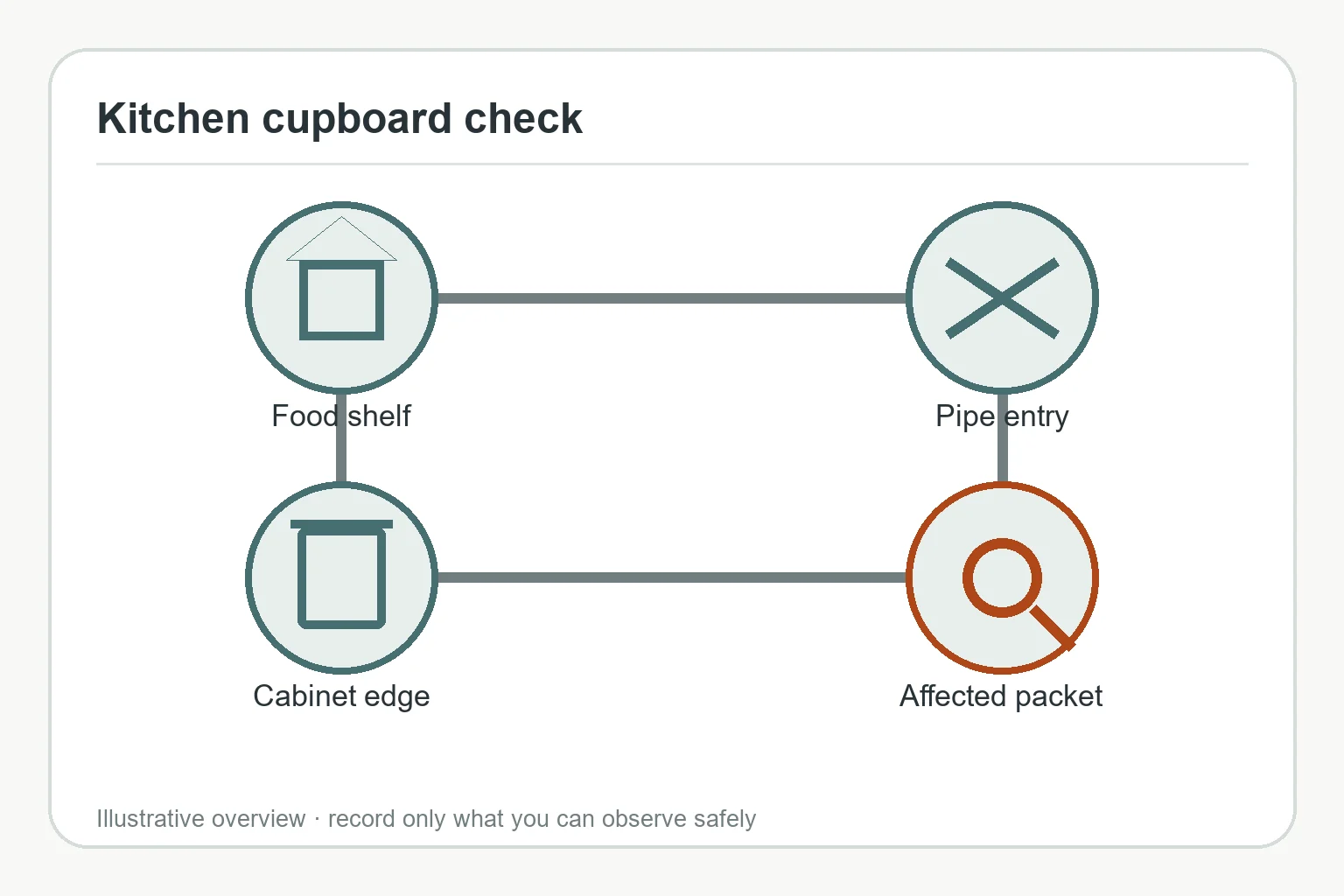
Check other accessible shelves and nearby cupboards visually without pulling out fitted units. If the same material appears in several places, mark them on a simple kitchen sketch. Do not assume a route between them: a stored item may have been moved. The location pattern is useful for the inspector to test, not proof of how an animal travelled.
Look for other signs such as gnawed packaging, shredded paper or a visible gap around a service pipe. Describe them separately from the pellets. A sighting is worth noting too, including where the animal disappeared. The existing guide on proofing a home against mice covers wider entry-point awareness; here, the question is what the cupboard evidence actually shows.
Do not identify species from one pellet
Mouse droppings are generally smaller and slimmer than rat droppings, but size can vary and debris can break apart. A dark colour does not confirm that material is recent. Lighting, moisture and cleaning history affect appearance. If you cannot identify it from a photograph, call it suspected rodent waste rather than a confirmed mouse sign.
The location near food makes the hygiene response worthwhile even while identification remains uncertain. Avoid placing traps or bait inside a food cupboard without a plan. A professional should first consider what the material is, whether activity is current and how the cupboard connects to wall and service voids. A treatment aimed at the wrong animal or wrong route wastes time and can create avoidable risk.
If activity seems to continue, ask about a mice-control inspection and share the photographs. Explain whether there have been sightings or sounds as well as the cupboard finding. If larger evidence raises a different identification question, the provider can assess that rather than forcing the case into a mouse treatment simply because the waste was indoors.
Clean suspected waste with care
Do not dry sweep or vacuum suspected rodent waste. Disturbing dry material can put contamination into the air. Follow current UK public-health guidance: wear gloves, dampen small amounts with a suitable wet wipe or damp towel, bag the waste, clean and disinfect the surface, and wash hands afterwards. Follow the product label and never mix cleaning chemicals. A food-contact surface may need further rinsing according to the product instructions before use.
For extensive contamination, inaccessible voids or material inside insulation, ask the pest provider how specialist cleaning should be arranged. A normal vacuum cleaner is not a safe shortcut for an awkward cupboard cavity. If there are exposed electrical services or a heavy fitted appliance, do not pull things apart while cleaning. The cleaning plan should be proportionate to what can be reached safely.
Keep a photograph of the original evidence and note when the surface was cleaned. That creates a reference point: new material appearing in the same spot after cleaning is more informative than an undated first discovery. Continue ordinary food hygiene, but avoid repeatedly disinfecting the same area as a substitute for finding the access route.
Inspect likely access points without sealing them yet
From a safe position, look at pipe penetrations, rear corners, plinth gaps and damaged seals. Take photographs of visible gaps. Do not remove kickboards, pull out appliances or push tools into holes solely to prove a route. If a fitting is removable, ask the provider whether access would help and who should do it safely.
An opening near pellets may be relevant, but there may be more than one route through a kitchen. The pest-proofing service can be appropriate after inspection identifies which gaps need repair and when they should be closed. Sealing a suspected active route before understanding the animal's movements can redirect activity into another cupboard or void.
Keep food in sound containers, repair obvious container damage and close bin lids. These steps reduce attraction but do not demonstrate that the animal has gone. If you live in a flat, a shared service riser or neighbouring void may need coordinated access. Tell the managing agent or landlord about the evidence factually and ask how common spaces can be inspected.
What to ask the inspector
Ask what evidence confirms the species, where activity is occurring and how the route will be checked. Discuss whether food packaging and surfaces need further cleaning. Clarify the scope of any treatment, safety measures for occupants, follow-up dates and whether proofing or building repairs are separate. An inspection should explain what is known and what remains uncertain rather than promising a fixed outcome from one cupboard photograph.
After the visit, keep a dated log of any new signs and the surfaces that have been cleaned. A single old pellet found behind a later-moved jar is different from repeated new material on a freshly cleaned shelf. That distinction lets the provider judge progress and decide if another route needs attention.
The first safe checks are straightforward: isolate affected food, photograph the location, clean small accessible areas carefully and arrange identification if signs continue. The aim is a usable record and a safe kitchen, not a confident species label from one dark speck.