

Shared space, separate observations.
Keep the report factual.
WILLESDEN · SHARED KITCHEN REPORTS
Pest Control Willesden
Identify the finding before assigning it to a household member.
In a shared kitchen, residents may use different refrigerator shelves, cupboards and cleaning routines. A Willesden pest enquiry works best when each observation has a location and date. Finding an insect near one person’s food does not establish who introduced it, and an inspection should not become a substitute for resolving a household disagreement.
Give the kitchen layout and each independently observed finding.
- Use shelf and cupboard references rather than occupant blame.
- Arrange permission for private storage where needed.
- Choose one contact to pass preparation instructions accurately.
Keep the original observations separate.
In or beside the refrigerator
Describe whether the finding was on the outside floor, beside a seal or within a food-storage area. These are different inspection locations. Give the original image and approximate size rather than identify an insect from its proximity to chilled food.
A cupboard allocated to one resident
Record the shelf and finding without assuming ownership establishes a source. Explain whether packaging was damaged or an insect was present. An unopened private cupboard should not be described as examined just because the rest of the kitchen was accessible.
Several people reporting the same event
Distinguish one sighting retold by several residents from several independent sightings. A useful record preserves dates and first-hand descriptions. This prevents apparent escalation created only by repeated messages in a household chat.
Agree kitchen access before the appointment.
Private and shared contents
Clarify what the household can make available and where permission is needed. Food, personal belongings and locked storage may require arrangements with individual residents. The pest inspection should not imply unrestricted authority over another person’s possessions.
Appliance movement
Explain fixed connections and who can arrange safe access. Do not pull out a connected refrigerator or other appliance without appropriate planning. An inaccessible rear edge should be recorded as a limitation rather than guessed from the visible front.
Link the assessment to the supported pest evidence.
Kitchen insects
The cockroach control information is relevant where identification supports that concern. An unfamiliar insect on a refrigerator is not automatically a cockroach. Ask whether the photograph is sufficient and which surrounding edges need examination.
Rodent signs
Describe sightings, damaged food and suspected droppings independently. Mice enquiries and rat-control assessment concern different evidence and possible scopes. A shared kitchen does not determine which species is present.
Building openings
Explain accessible service penetrations around the relevant units. Where exclusion is proposed, proofing guidance helps frame the discussion. A gap is a feature to assess, not proof of a route or responsibility for the problem.
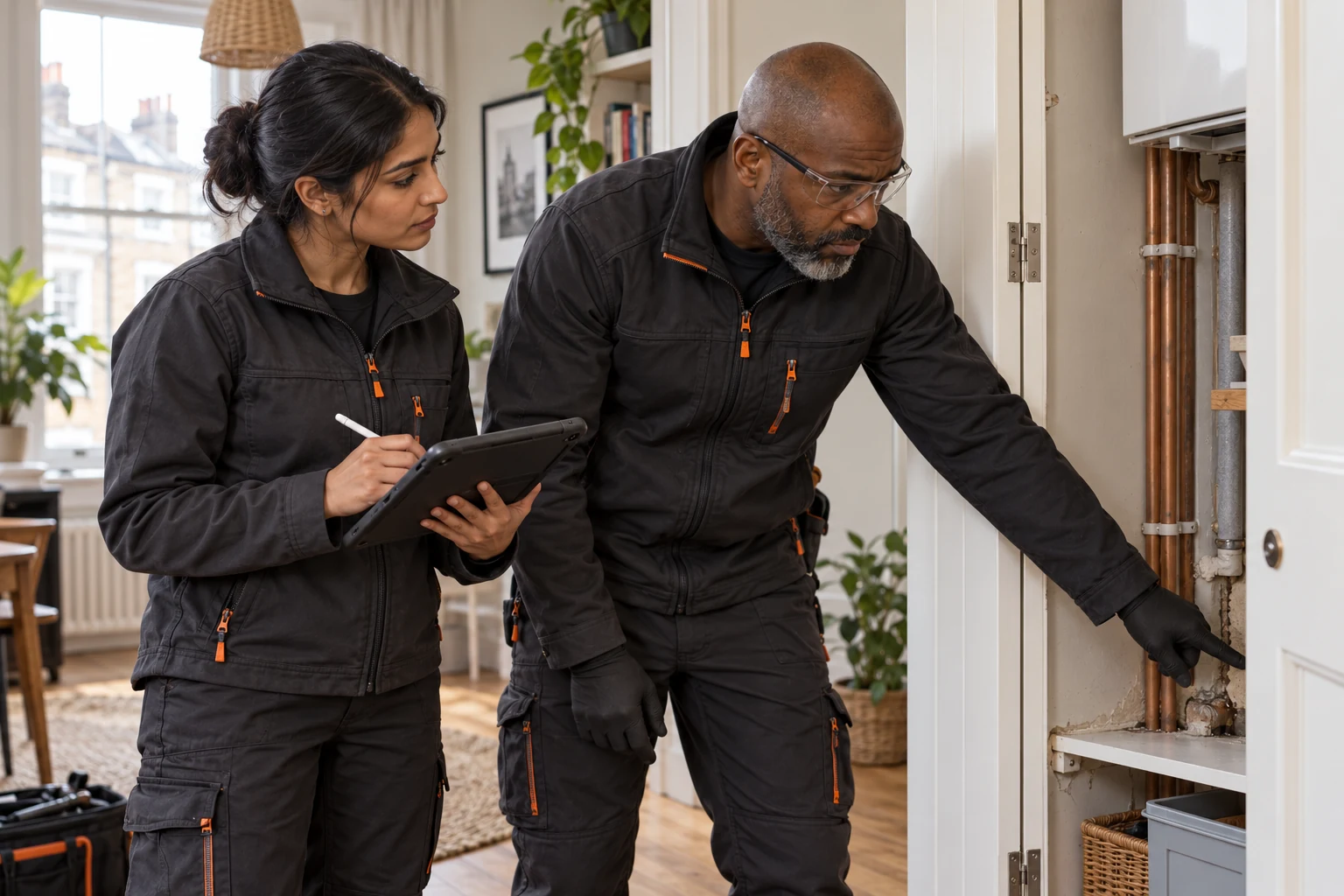
A household discussion can establish which cupboards and appliance edges will actually be accessible.
Make preparation understandable to every kitchen user.
A single instruction record
Choose a responsible contact who can circulate the actual instructions without paraphrasing essential details. State what each resident needs to make accessible and when. Conflicting preparation messages can leave agreed tasks incomplete even when everyone believes they followed advice.
Food and occupied areas
Ask about the proposed method, affected locations and return-to-use requirements. Follow the instructions supplied for that work. There is no useful universal rule that every kitchen treatment requires the same clearance or closure period.
Review and cleaning
Agree what cleaning is appropriate and how treatment equipment should be protected. Report subsequent findings by fixed location. Unplanned equipment movement or changes to cupboard allocation should be noted so later assessment has the current arrangement.
Compare the same accessible kitchen scope.
Explain cupboard restrictions, appliance access and any additional rooms with separate findings. Ask what visits and preparation advice are included. The pricing guide helps the household compare proposals without mistaking a limited inspection for treatment of every private storage area.
Shared-space enquiries nearby
Wembley pest control discusses communal laundry preparation, and Kilburn’s bedroom-move guide considers moving between rooms. Provide the actual Willesden address and shared-kitchen arrangements when calling. Each enquiry needs its own evidence and permission.
Questions from shared-kitchen households
Does a finding on one person’s shelf establish who caused the problem?
No. Location is useful evidence, but it does not establish responsibility or the source of an insect.
Do all residents need to be present?
Ask what access and permission the appointment requires. One contact may coordinate practical arrangements, but unavailable private storage must remain a clear scope limitation.
Should we forward every message from the household chat?
Provide a concise factual record of independent findings. Keep repeated accounts of one event distinct and avoid unnecessary personal information.
Can treatment proceed if one cupboard is locked?
Discuss the restriction before booking. It may limit assessment or preparation, and the result should not claim that the inaccessible cupboard was covered.
Should everyone clean the kitchen immediately after treatment?
Follow the agreed cleaning instructions for the method and areas involved. Unplanned cleaning or equipment movement can interfere with the work.
What if residents exchange fridge shelves during review?
Record the change and keep findings tied to fixed refrigerator locations. Otherwise an observation record based only on ownership can become misleading.
Keep coordination focused on the kitchen evidence.
Talk with Getting Rid of Pests about the original findings, accessible storage and household contact. Ask about emergency pest control appointments where prompt attention is needed. A clear shared record helps inspection and preparation proceed without unsupported attribution.
Nominate a contact who can coordinate the kitchen access.