
HOLLAND PARK · MOTHS & FABRIC DAMAGE
Pest Control Holland Park
Seeing a moth is not the same as finding textile feeding.
One moth against a Holland Park window can raise questions about curtains and wardrobes. The useful distinction is between an adult insect, signs associated with a larva and damage that may have another cause.
- Keep the moth sighting apart from the first damage date.
- Read the care label before choosing cleaning methods.
- Describe silk traces only where they were actually found.
Mention the actual garment or furnishing, rather than assuming every textile is affected.

Adult sighting. Fabric condition. Separate questions.
Look beyond the flying adult
The window observation
An adult moth may be noticed where light makes it visible. Its position is not proof of a feeding site. A clear identification can help decide whether the textile concern and the flying insect belong together.
The textile observation
Clothes-moth larvae can feed on suitable fibres; adult moths are not the fabric-chewing stage. Describe the damaged material, associated larvae or cases and whether the hole was previously present. Keep uncertain causes open.
A visual starting point
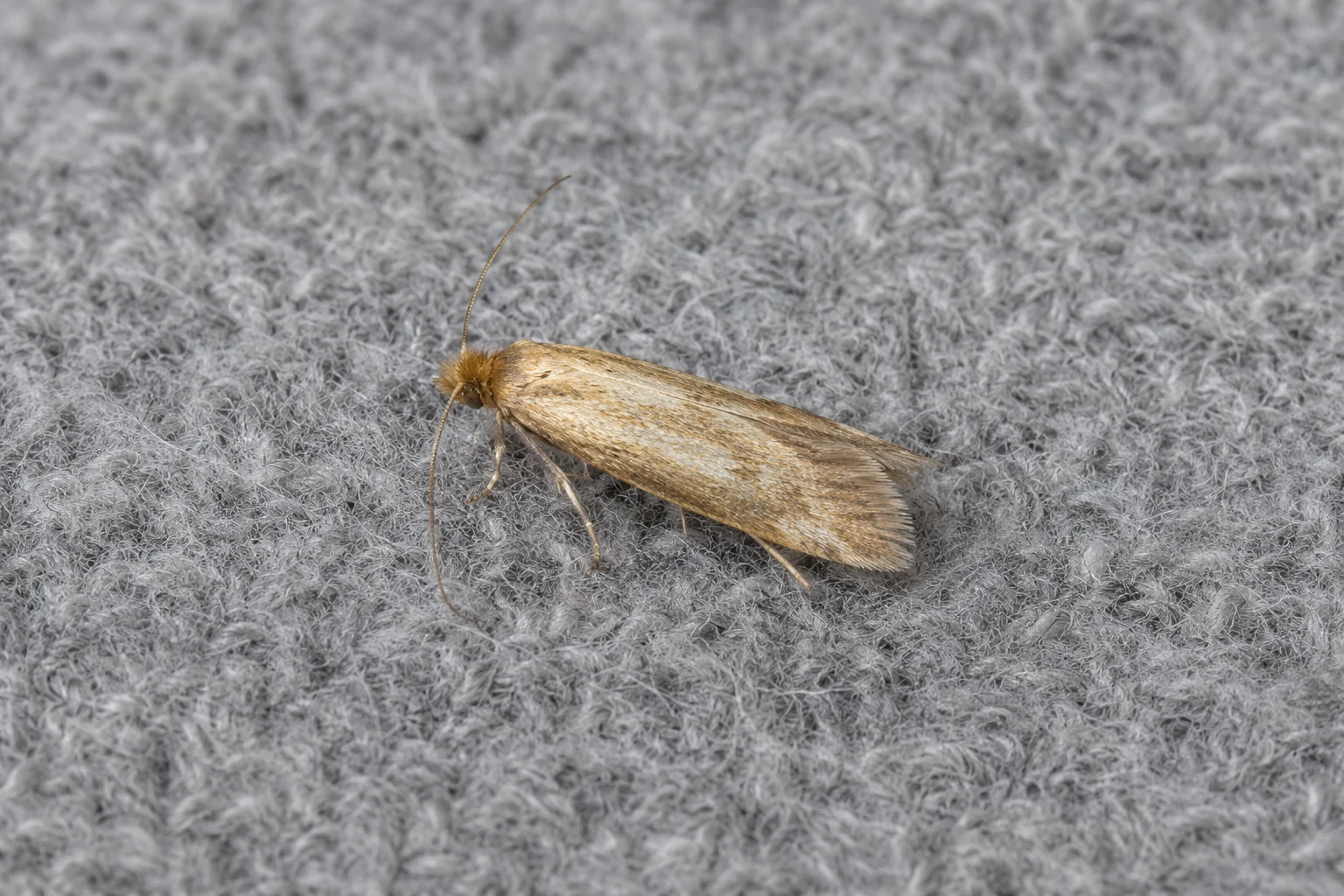
Moth appearance
A reference image can help explain your question but should not replace the insect seen in the room. Use the contact page to confirm identification assistance; not every flying moth calls for clothes-moth treatment.
A moth trap is a detection tool, not a wardrobe treatment
Know what it is intended to detect
Some clothes-moth monitoring traps use a species-specific pheromone lure and attract males. A trap for one moth is not a general test for all moths, carpet beetles or every textile insect. Retain the product information if a trap is already in use; do not infer identification from the word “moth” on a generic advertisement.
Read a catch alongside the textiles
An identified adult in a suitable monitor can inform an enquiry, but does not count the larvae or examine the garments. Keep observations at collars, folds and accessible furnishing edges separate from catches. Those material checks address a different part of the question from adult detection.
Interpret an empty monitor carefully
An empty trap cannot certify every possession unaffected. Placement, intended species and observation conditions matter. Ask whether the monitoring arrangement is appropriate before changing it repeatedly to obtain a reassuring result.
Check the wardrobe and curtain as different locations
Describe accessible folds, stored garments and the relevant furnishings without stripping the whole room first. Curtains and wool clothing have different handling needs. Explain what has been cleaned, removed or treated since the discovery.
At the Holland Park property, specify which possessions are yours to move and which furniture is fixed. An inspection can relate supported signs to accessible materials while acknowledging anything it cannot assess. Ask for the reason behind a proposed extent, rather than assume an adult seen in one room establishes damage everywhere.

Choose between monitoring and assessment
An isolated unresolved adult
A clear identification discussion may be more useful than treating the wardrobe immediately. Keep the adult view and actual fabric condition available. Do not purchase several different traps to force a species answer from inconsistent results.
Supported textile feeding
Larval findings or supported changes to suitable materials may justify an assessment of the affected possessions and accessible storage. Confirm available assistance, the intended detection or treatment purpose, and preparation compatible with the textiles. Detection equipment is not automatically control of all life stages.
Price the agreed examination and work
Discuss items, access and review through the price guide. Do not infer a package from the number of moths noticed. A bed-bug enquiry concerns different evidence and should not be selected because textiles happen to be near sleeping furniture.
Explore different insect questions nearby
Notting Hill covers flying-insect lookalikes. West Kensington considers a different property inspection brief.
Moth and furnishing questions
An identification discussion should connect the life stage to the material at risk.
Does a moth at the window mean the curtains are being eaten?
Its resting place alone does not establish feeding. Look for supported textile findings and identify the insect separately.
Would every fabric hole have silk beside it?
No. Absence or presence of one feature should not replace assessment of the material and other findings.
Can old damage be used to measure current activity?
Only if its earlier condition is known. An existing hole does not date itself or prove feeding continued after a change.
Should delicate curtains be washed before an inspection?
Ask for handling advice and follow the care requirements. Cleaning first may change what remains visible and can damage unsuitable fabrics.
Is one adult enough to justify discarding clothes?
Do not discard possessions solely from an unresolved adult sighting. Clarify identification and the supported extent first.
Can textile insects be assessed without removing fitted wardrobes?
Describe normal access and restrictions. Confirm what an inspection can examine before any dismantling is proposed.
Connect the insect to supported fabric evidence
Contact Getting Rid of Pests about the Holland Park materials and observations, with care requirements and earlier work ready to discuss.