
Keep the sequence useful.
Arrival, unpacking, storage, discovery.
FELTHAM · AFTER A DELIVERY
Pest Control Feltham
Work out what was seen before deciding where it came from.
A large appliance or furniture delivery can leave boxes, protective wrapping and inaccessible corners in a room that is still being rearranged. If pest signs appear in a Feltham property during that period, record their location and timing. Finding an insect beside a box does not establish that the delivery introduced it.
Explain the delivery date, unpacking location and first finding.
- Separate packaging observations from room observations.
- Note which surfaces were hidden before the delivery.
- Check disposal and preparation before shifting belongings.
Make a short record while the sequence is fresh.
What arrived and where it stood
Describe the item, whether it was new or used, and where the outer packaging was kept. Note whether it was unpacked immediately or stood in a garage or hallway first. These details give context; they are not evidence that a supplier or previous owner caused an infestation.
The first confirmed observation
Identify what was actually found: a live insect, damaged material, a mark or suspected droppings. Retain an original photograph where this can be done safely, with approximate size and location. Avoid replacing an uncertain finding with a pest name taken from a search result.
What became visible during rearrangement
Moving a cabinet or clearing a corner can expose older damage or debris. Record whether the area had been visible before. The date something was discovered may differ from the date it developed, and that distinction can prevent a misleading account of a new problem.
Keep the room usable while inspection access is arranged.
A large item still blocking the wall
Tell the team if an appliance, packed wardrobe or heavy furniture prevents examination of the reported location. Agree what can be moved safely and by whom. A pest appointment should not depend on unplanned lifting, electrical disconnection or work outside the agreed scope.
Packaging awaiting disposal
Ask whether identification or inspection needs any particular evidence retained before disposal. Do not spread suspect wrapping through other rooms to sort it. Use the property’s appropriate waste arrangements and check Hounslow’s current guidance where collection or bulky-item disposal is unclear.
Inspect the finding and its surroundings, not just the box.
Species comes before a treatment label
Different insects can be associated with paper, stored goods, furnishings or the room itself. A photograph may help, but an unclear image can leave identification unresolved. Confirm which service is appropriate rather than book bed bug treatment solely because a delivery included upholstered furniture.
Relevant concealed edges
For suspected rodent evidence, describe the wall edge, pipework or cupboard behind the item and any other room findings. Mice control may be relevant to small-rodent signs; rat control addresses a different enquiry. Size assumptions from a single blurred photograph should not settle that choice.
A bounded inspection result
Ask which parts of the item and room were examined and which remained inaccessible. A useful result separates observed evidence from possible routes. It should not claim that every item in the house is unaffected when the appointment covered one room and a delivery area.

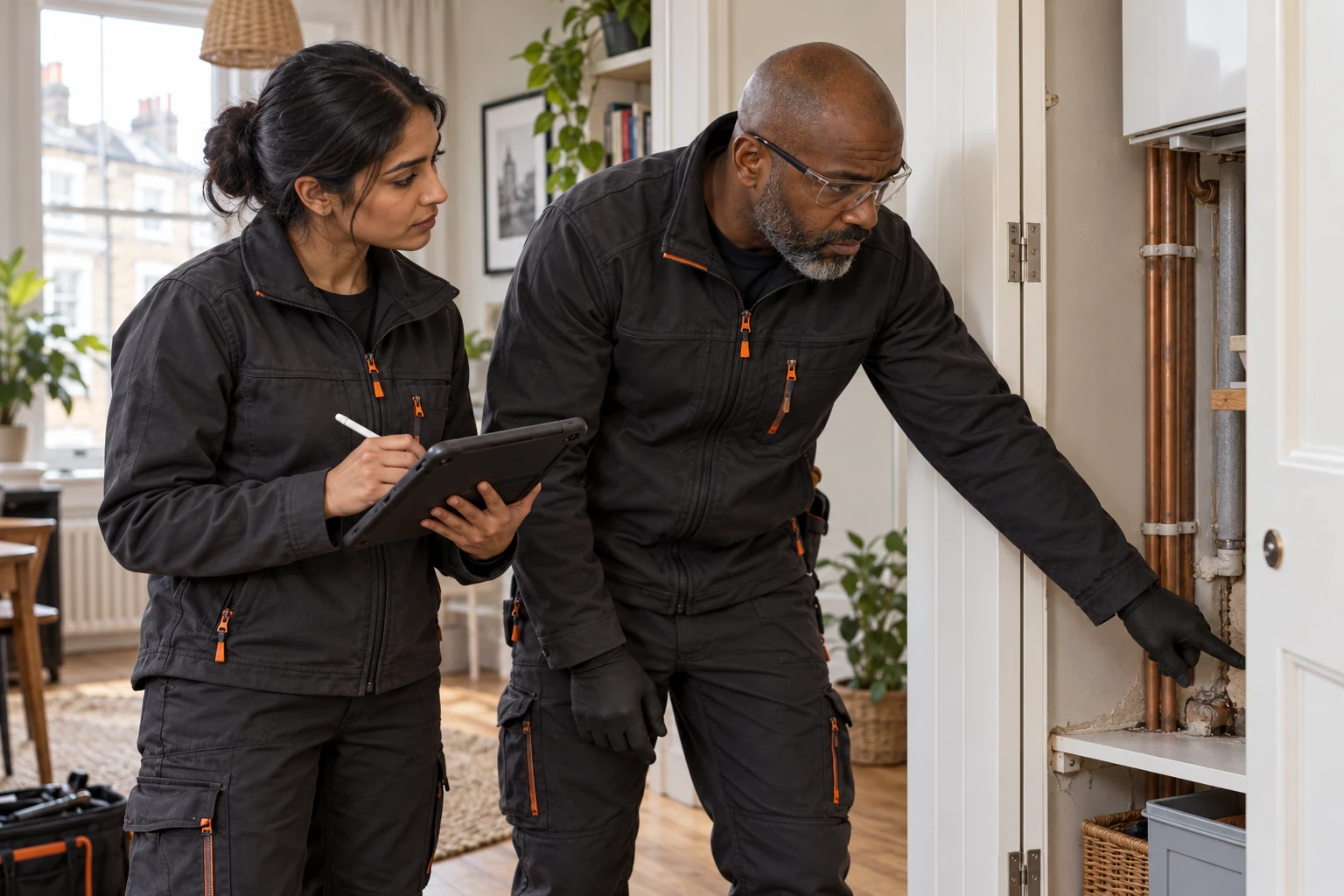
Cabinet inspection may reveal room evidence distinct from anything found on incoming packaging.
Preparation depends on the identified problem.
Upholstered furniture concerns
Where bed bugs are a supported concern, ask about examination of seams, adjoining sleeping areas and preparation before moving the item. Follow the bed bug treatment guidance relevant to the proposed method. Putting a sofa elsewhere can change the inspection picture without resolving the concern.
Rodent findings behind an appliance
Explain appliance connections and any fixed cabinetry before access work is agreed. Treatment and suitable exclusion may both need consideration. Closing an opening behind a new appliance without reviewing other access points can leave the cause unresolved or obscure useful evidence.
Unsupported insects on wrapping
Ask whether identification and assistance with that species are available. An insect on cardboard is not automatically a cockroach, flea or bed bug. Named treatment should follow supported identification, and any limits to the offered service should be clear before booking.
Avoid turning unpacking into repeated disturbance.
Keep a stable reference point
Label the location in your notes and record subsequent observations against it. “Near the delivery” becomes unhelpful once boxes have moved several times. A room sketch or a photograph of the original arrangement makes later discussion more precise.
Review storage habits after the assessment
Avoid retaining unnecessary packaging against inaccessible walls. Keep enough room to inspect and clean around stored items, and address relevant food or waste opportunities if rodents are involved. These changes should reflect the identified issue rather than a blanket instruction to discard everything.
Ask what the inspection and any follow-up include.
The size of a delivered item does not itself establish a treatment price. Explain the suspected pest, room access and whether a separate location also has evidence. Use the price information to ask about inspection, preparation, return visits and any exclusion work before agreeing the scope.
Enquiries around the delivery address
For another property, the Hounslow workplace guide and Heston plumbing-area guide cover different contexts. Confirm the actual Feltham postcode and whether there is parking or safe access for the inspection. Delivery history should stay attached to the property where the finding occurred.
Questions after unpacking
Can you establish that a delivery brought the pest in?
Not from timing alone. Identification and the location history may support an assessment, but a new observation does not automatically prove a source.
Should I send a photograph of the box as well as the insect?
A wider photograph can show the original location, while a clear close image with scale can help identification. Keep both as separate records rather than crop away all context.
Is an insect on a sofa enough to request bed bug treatment?
It is enough to make an identification enquiry. The insect and relevant furnishings need assessment before the observation is treated as confirmed bed bug activity.
What if the appliance must remain connected?
Explain this in advance. Safe access arrangements and any required trade work should be agreed rather than improvised during a pest inspection.
Can I remove all cardboard before the appointment?
Ask what evidence, if any, should be recorded first and how disposal should be handled. Do not move suspect material throughout the home purely to clear the inspection room.
Does old damage found behind a new cabinet count as a new infestation?
The discovery is new, but the damage may not be. Record when the area was last visible and allow the inspection to assess whether there is evidence of current activity.
A useful enquiry starts with the sequence.
Contact Getting Rid of Pests with the delivery date, first finding and current room arrangement. For a time-sensitive concern, discuss urgent pest control availability. The next step should be based on the evidence and accessible inspection scope, rather than blame assigned to the most recent item entering the house.
Talk through the delivery and the finding without assuming a source.