
CANONS PARK · WINDOW INSECTS & COATS
Pest Control Canons Park
A flying insect on the sill does not establish damage in the coat cupboard.
In Canons Park, an adult insect by a window and holes in stored clothing need connecting through supported identification. This guide keeps flight, textile feeding and existing garment damage distinct.
- Read the garment material and care information.
- Keep any larval finding separate from a flying adult.
- Avoid assuming old coat damage happened this week.
Give the two locations separately and explain what was actually found in each.
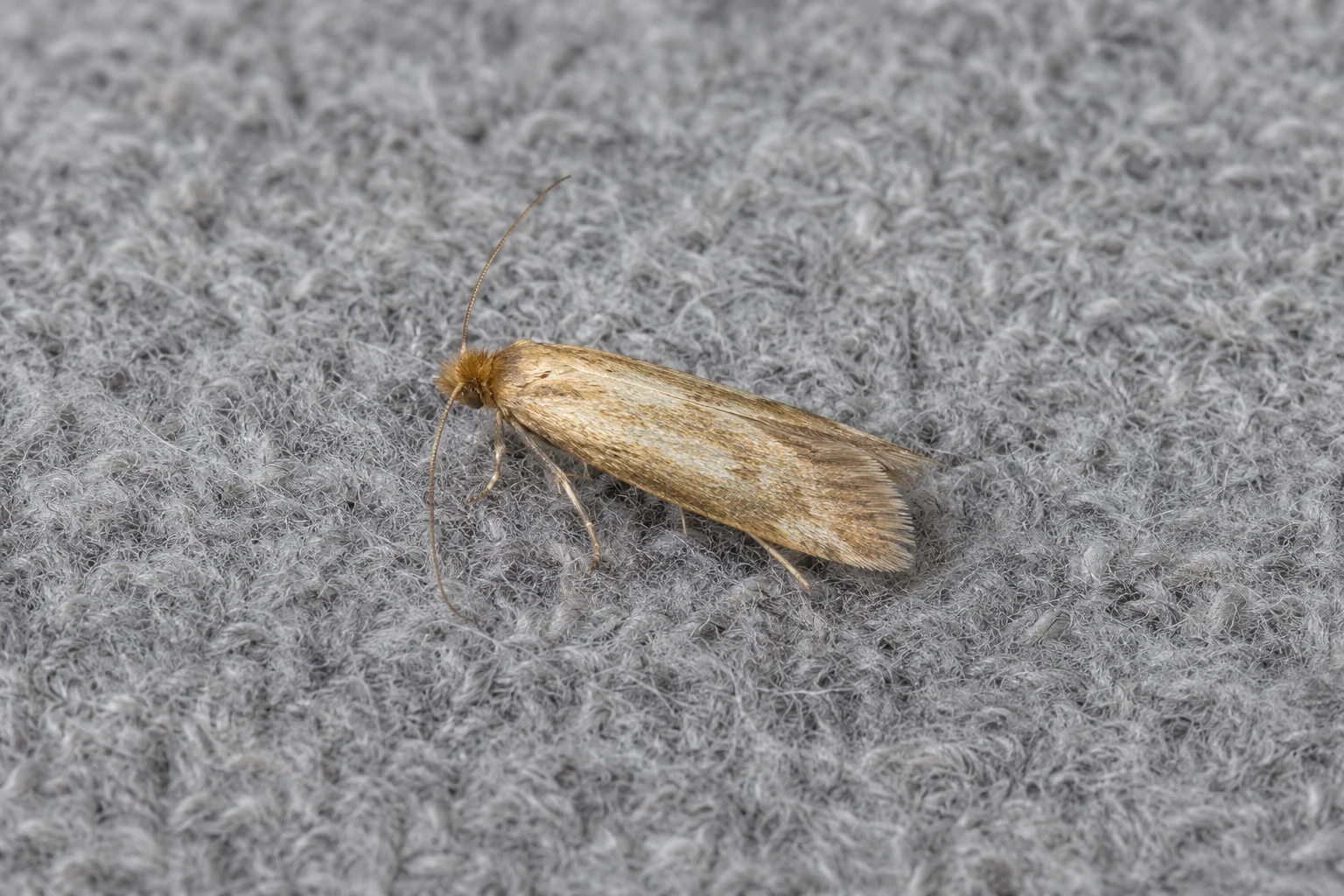
Flight is an observation. Feeding needs its own evidence.
Begin with the clothing condition
The material
Wool and other natural-fibre possessions may be relevant to textile-insect assessment. Material helps frame the question without proving that damage was caused by insects.
The storage history
Describe when the coat was put away and first checked. An unnoticed hole does not date itself from the discovery day.
Then consider the insects
Adult at the window
Identify the original insect where possible. The sill is where it was noticed, not necessarily a development or feeding source.
Larval evidence in storage
Larvae, cases or cast skins can add different identification information. Clothes moths and carpet beetles involve distinct appearances; do not merge every fragment into the adult sighting.
Identify the adult at the window before connecting it to coats
A moth-shaped outline
Describe the resting wing outline and visible colour from the original image. If those details are indistinct, identification may remain open. The fact that an insect flew does not establish a clothes moth.
A small oval beetle
Adult carpet beetles can be noticed at windows. That adult observation is distinct from the larval stage associated with textile damage. An adult at a sill and an old coat hole still require a supported connection.
Two images with different jobs
A clear adult view helps identification; a garment view shows the affected material and damage. Neither should replace the other. Keep them labelled so the enquiry does not accidentally describe the garment’s lint as the photographed adult’s larva.
Make the two examinations explicit
Ask whether available assistance can identify the adult and separately assess the stored garment findings. For Canons Park, describe normal access to the sill and coat storage, earlier cleaning and any known item condition. A window observation need not justify treatment of the wardrobe.
If textile evidence is supported, preparation should respect the garments and their care requirements. If it is not, the next useful step may be adult identification or ordinary material assessment. A bed-bug service cannot substitute for those questions simply because the room contains a bed.

Protect possessions appropriately
Suitable clean storage
Manage garments using appropriate care and storage arrangements. Do not transfer suspect textiles into another cupboard before obtaining handling advice.
Material-specific cleaning
Care labels and the supported pest recommendation both matter. One hot-wash instruction cannot safely apply to every coat, lining or specialist fabric.
Clarify items and examination limits
Use the price guide to ask what is included and what review would establish. An adult at a window cannot price every stored garment.
Compare neighbouring identification questions
Stanmore looks at outdoor flying insects. Queensbury considers ant activity after surface cleaning.
Coat-storage questions
Choose assistance from the supported textile concern, not the nearest insect picture.
Is a window insect necessarily a clothes moth?
No. The adult needs identification independently of the garment damage.
Could a larval skin remain after feeding stopped?
Yes. An identified empty skin can inform history without proving current feeding.
Does the coat’s fibre label identify the pest?
It describes the material. Insect findings and damage assessment are still needed.
Should all coats be washed together as a precaution?
Follow individual care requirements and specific advice. Different materials may need different handling.
Can a previously stored hole be called fresh damage?
Only if an earlier known condition supports that change. Otherwise its timing remains uncertain.
Is wardrobe dismantling necessary for the first enquiry?
No. Explain normal access and restrictions before any work is proposed.
Keep the garment and adult observations distinct
Getting Rid of Pests can discuss the Canons Park storage and identify the appropriate available assistance.