
BRONDESBURY PARK · CAST SKINS IN TEXTILES
Pest Control Brondesbury Park
An empty skin tells a different story from a feeding larva.
A papery or hairy fragment beside Brondesbury Park wool storage can prompt a textile-insect enquiry. Distinguish old remains from living insects and existing fabric damage before judging what is happening now.
- Keep the skin’s location with its image.
- Separate old damage from newly observed changes.
- Explain cleaning that may have exposed the remains.
Describe whether the object was moving, hollow or simply an uncertain fragment.

Past development is not automatically present feeding.
Read the finding in time
An empty cast skin
Carpet-beetle larvae can shed skins as they develop. Identified remains may inform a pest history, but an empty skin alone cannot date activity or establish current feeding.
A living larva
Direct observation changes the enquiry. Describe the actual material and location, not an assumed source. A larva and an old skin should be recorded as different findings.
Previously stored damage
Holes discovered while unpacking wool may have existed during storage. Without an earlier condition record, discovery today does not establish when they formed.
Examine the storage that remains
Explain natural-fibre possessions, boxed contents and normally accessible furniture edges. Give cleaning and movement dates. At the Brondesbury Park address, distinguish what can still be examined from items already removed.
Identification should connect the life stage to the material without treating every fibre fragment as pest evidence. Use the contact team to confirm available assistance for a supported textile insect. The bed-bug page concerns different identification and should not become a default for all bedroom insects.
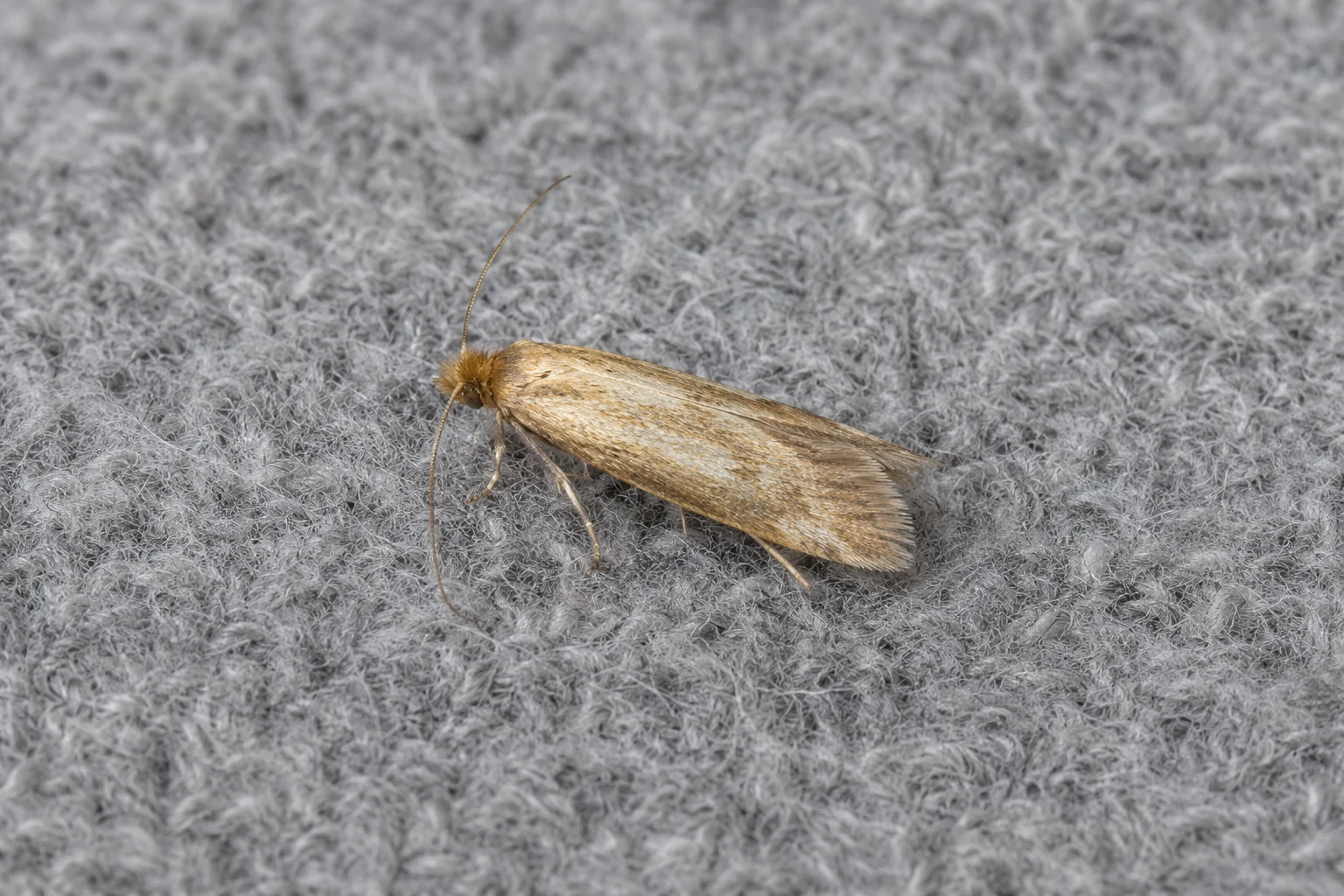
Organise the next textile check
Establish a known condition
Record the affected item and visible damage before further suitable handling. Later comparison is more useful if the original item and position remain identifiable.
Use appropriate care
Ordinary cleaning and suitable clean storage can help manage possessions. Follow care labels and specific advice rather than apply one cleaning temperature to every material.
Ask what assessment can establish
Confirm the scope, handling requirements and review through the price guide. An uncertain skin cannot determine a treatment method or package on its own.
Related material questions
Brondesbury considers kitchen insect identification. Queens Park provides a nearby inspection guide with a different focus.
Remains and activity questions
Ask which remaining findings can clarify the current condition of the storage.
Does a hollow skin prove a larva is still nearby?
It records a possible earlier development stage if identified. Current activity requires separate assessment.
Can colour establish how old a cast skin is?
Do not assign a date from colour alone. Conditions and exposure can affect appearance.
Is a hairy fragment necessarily a whole larva?
It may be a skin, another fragment or ordinary material. A clear view and structure matter.
Does vacuuming away skins settle the infestation question?
It removes visible material. It does not establish what remains in inaccessible textile edges.
Must old holes be treated as new damage?
No. Keep their age unresolved unless an earlier condition comparison supports a change.
Should every stored wool item be thrown away?
Clarify identification, extent and suitable handling first. One uncertain fragment is not a reason for automatic disposal.
Keep the life stage and timing honest
Getting Rid of Pests can discuss the Brondesbury Park textile evidence and what an assessment could usefully clarify.