
Shared bins and rat activity: a practical site checklist
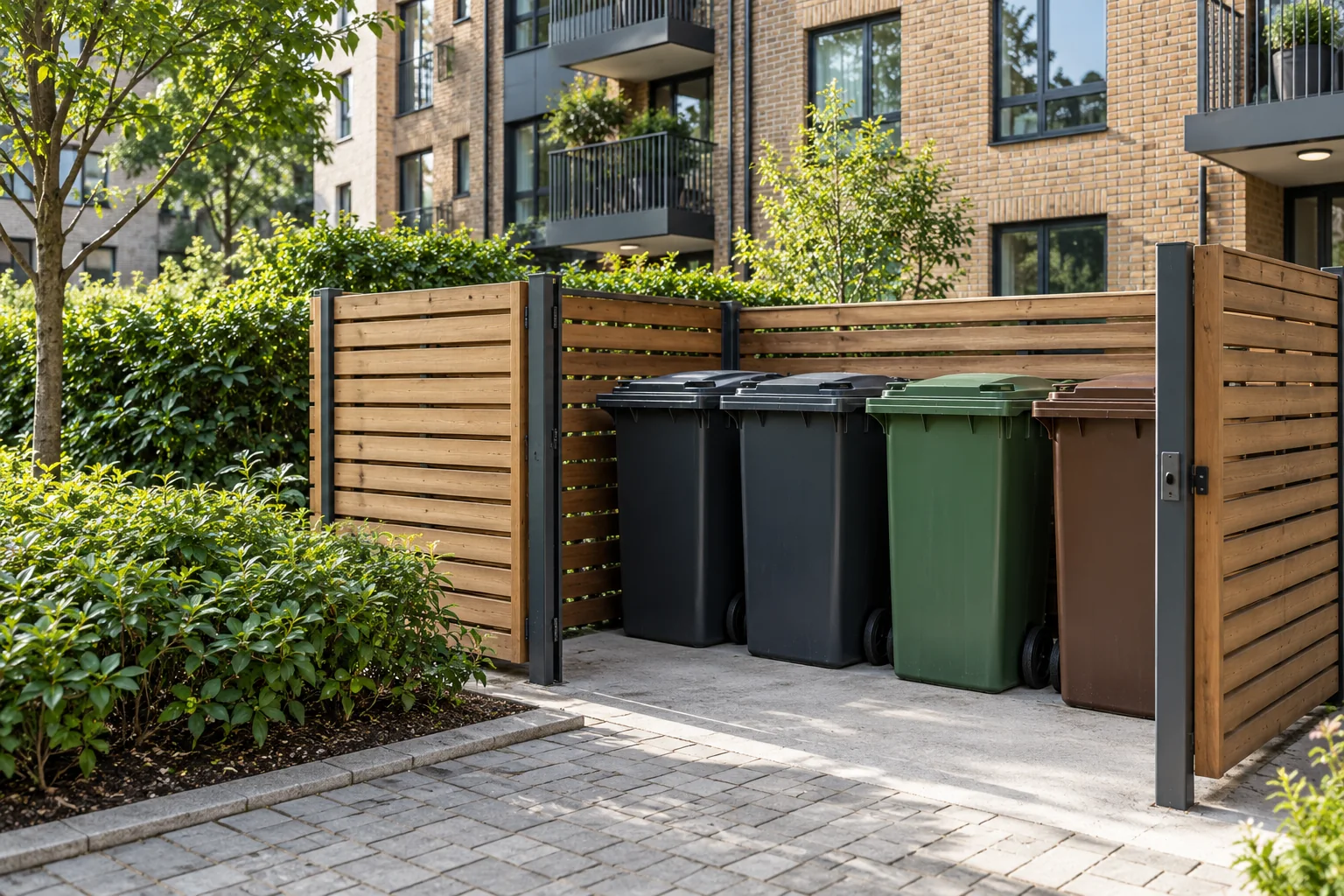
A rat seen near shared bins is a practical site problem, but a single sighting does not show where the animal came from or whether it lives beside the enclosure. Shared waste areas have several moving parts: residents use them, collections occur on a schedule, and gates, drains and neighbouring land may influence access. A useful response combines a clear site record with prompt housekeeping and a coordinated inspection when activity persists. Nearby gardens may show other clues; our garden burrow guide describes how to record an opening without disturbing it.
Begin by telling the person responsible for the bins the date, time and precise position of the sighting. Include a photograph only if it was taken safely from a distance. Avoid naming a particular resident as the cause. Waste management works better when the manager can identify a fixable pattern rather than adjudicate speculation.
Walk the area in daylight
Check whether every bin lid closes, whether waste is left on the ground and whether the number of bins suits the volume between collections. Note damaged containers, overflowing bags or a gate that prevents collectors from reaching the bins. Photograph the whole enclosure before focusing on an individual gap or spill. A close-up without location can make it difficult for a manager or contractor to act.
Look from safe positions at the edge of the enclosure, nearby vegetation, fence base, wall openings and drain covers. Do not reach behind bins or pull apart a suspected burrow. If a cover is loose or the ground unstable, keep clear and report it as a maintenance issue. A rat passing along a fence might be attracted by the bins while entering the site from somewhere else.
Record the condition on more than one day if possible: immediately after collection, the evening before it and an ordinary midweek day. A bin area that is tidy after collection but overflowing two days later suggests a capacity or usage issue. Do not wait weeks for a perfect dataset if rats are repeatedly seen, especially near a building entrance or food premises. A short record can be gathered while an inspection is arranged.
Separate waste problems from access problems
Food waste on the ground is an attractant that should be cleaned using the site's normal safe procedure. Bin lids should be kept closed, and loose bags should not be left beside containers. Yet even excellent waste practice may not resolve a route through a damaged wall, drain or neighbouring plot. Both sides of the problem need attention when evidence supports them.
Ask the manager whether the enclosure can be adjusted so bins are easy to use and collection crews can empty them fully. A lid that residents cannot close because a bin is overfilled calls for more capacity or a different collection arrangement, not simply a sign telling people to close it. If collection is missed, report the missed date and resulting overflow to the relevant provider.
Avoid hosing suspected rodent waste into a drain or dry sweeping it into the open. Ask how cleaning will be done safely and whether a specialist is needed for extensive contamination. Keep children and pets away from visible waste or a suspected burrow. The older article on general rodent prevention in homes discusses household habits; a shared bin site requires management of a communal system and its maintenance records.
Make a record others can use
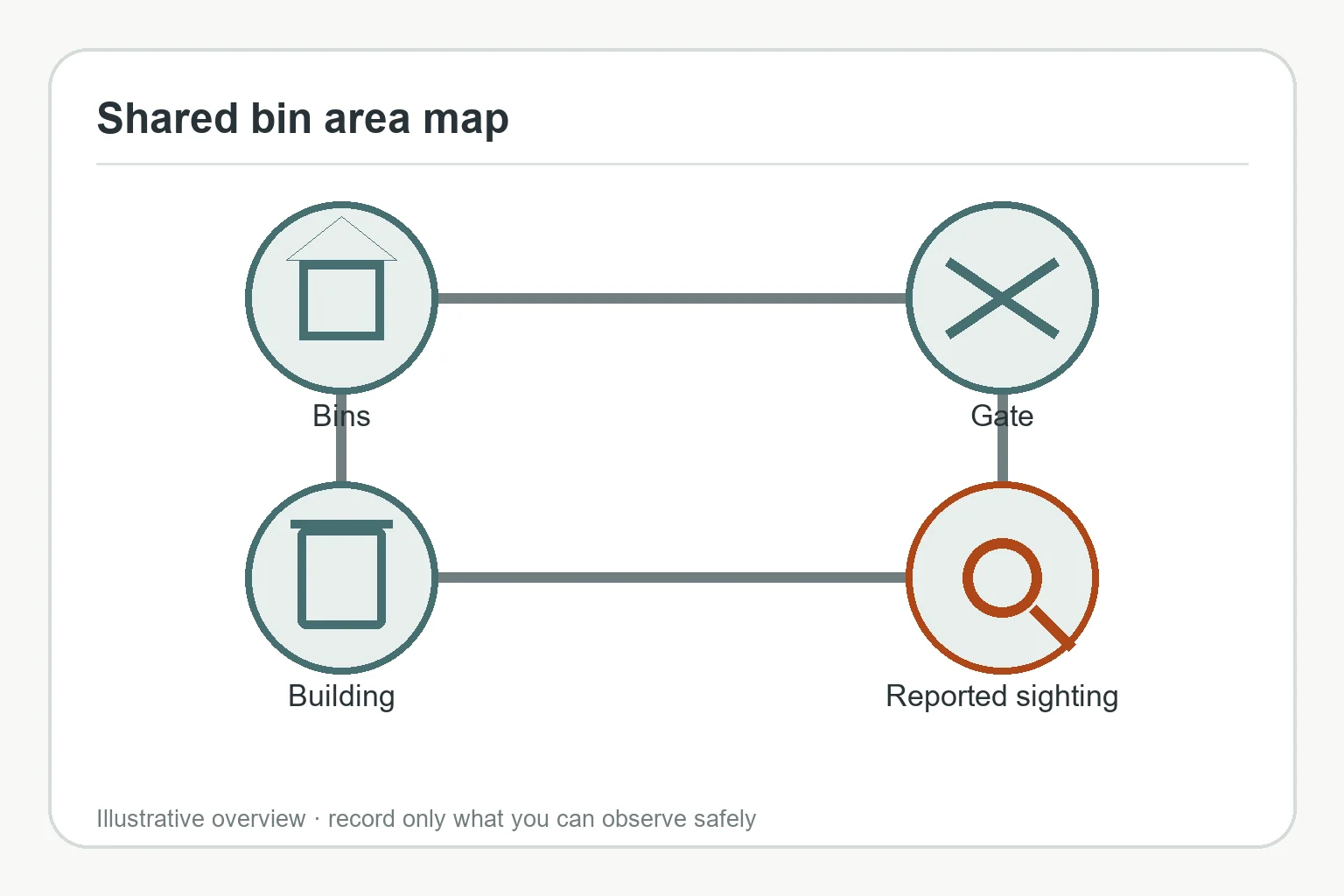
A simple table of date, time, location, sign and action is enough. “Rat crossed from fence to bins at 19:20”; “lid broken on bin three”; “loose bag removed by caretaker on Tuesday” are factual entries. Attach a site plan or mark locations on a photograph. If several residents submit sightings, keep their accounts separate until they can be compared.
Note access restrictions. The pest technician may need a gate code, caretaker contact, permission to inspect a service cupboard or a quiet period when the area is not in use. Tell the provider whether a shop, kitchen or residential entrance sits beside the bins. These details affect how a visit is planned and how people are protected during any work.
If activity continues, arrange rat-control inspection that considers the bin area and routes to nearby buildings. Ask which evidence supports an active rat problem, where movement is likely and whether drainage or structural assessment is needed. The site should not be treated as a series of separate sightings if the same path or access point may explain them.
Coordinate with residents and contractors
A concise message to residents can explain where waste belongs, how to report a damaged bin and whom to contact about a sighting. Avoid alarming claims such as “the whole block is infested” before it has been inspected. Equally, do not dismiss repeated sightings as a normal feature of city life. Provide a named channel for photographs and dates so evidence does not scatter across conversations.
The caretaker, managing agent, collection provider and pest technician may each control a different step. Decide who is responsible for cleaning spillage, repairing lids, arranging access and approving proofing. If a confirmed route requires building work, the pest-proofing service may advise on exclusion, while a drainage or building contractor may be required for other defects. Ask for a written sequence rather than having several trades close different gaps independently.
When a boundary is shared, notify the neighbouring manager with the observed facts and request cooperation on access if needed. Do not claim that one plot is the source without evidence. A rat can cross a fence in seconds; the important question is which food sources and routes sustain the activity across the site.
What to review after changes are made
Before reviewing sightings, check whether people can actually use the enclosure as intended. Bins placed too close together may stop lids opening fully; a gate that swings into a container can have the same effect. Residents may leave a bag beside a bin because the opening is inaccessible even when capacity is adequate. Photograph these physical obstacles and ask the manager to correct them. A request for tidier behaviour will not fix an unusable layout.
Pay attention to cleaning responsibility. If waste falls behind containers that staff cannot safely move, agree who has the equipment and authority to clear it. A plan should say how often the enclosure is inspected between collections and whom residents tell when a lid breaks. Without these practical arrangements, a one-off clean-up can be undone within days. Use the dated site log to show whether the changes have helped normal use as well as pest activity.
Check that new or repaired lids work under everyday use, not just in a demonstration. Monitor whether loose waste returns before the next collection and whether residents can reach all containers. Record sightings with the same date-and-location method used before the intervention. A quiet day is encouraging but not proof of resolution. The provider can explain what monitoring period and evidence would justify closing the case.
If a treatment is undertaken, ask how devices are secured, checked and removed and how the bin area can stay usable. Residents should know any temporary restrictions that affect safe use, without being given instructions to interfere with equipment. Follow-up observations should be passed to the responsible provider promptly.
The checklist is therefore practical: inspect bin condition, understand collection patterns, map repeat sightings, remove accessible food waste safely and have the route assessed. Each step answers a different question. Together they turn an isolated complaint into a managed response that can be checked and improved.