
Scratching in the ceiling at night: what should you check?
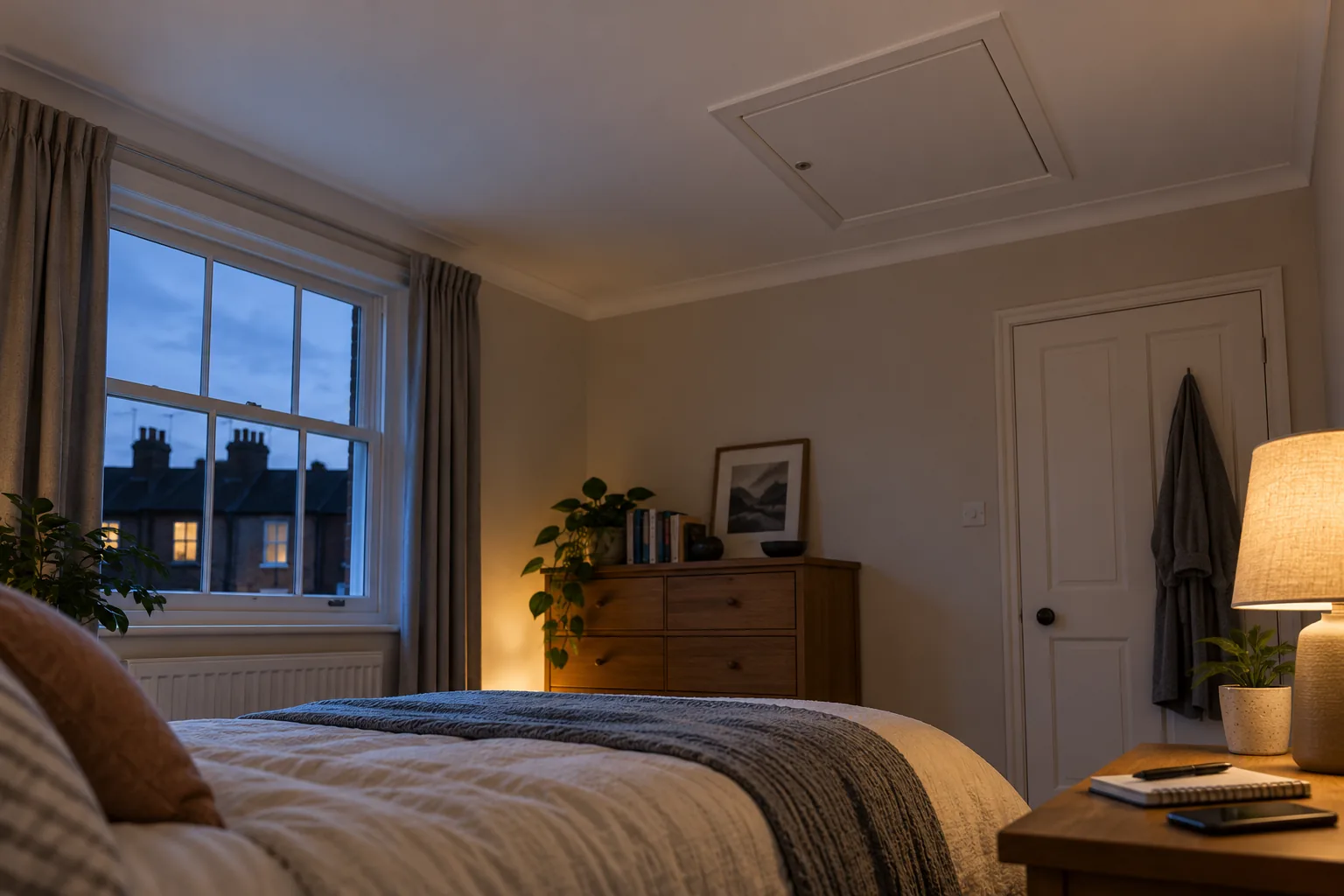
A sound above the ceiling can be hard to place. Scratching, tapping or short bursts of movement may seem louder at night because the house is quiet, but the noise alone cannot tell you whether an animal is present. Pipes, loose materials and weather can also produce sounds that travel through a ceiling. Start with a careful record rather than trying to reach the source immediately.
The most useful first questions are where you hear it, when it happens and whether any physical evidence is visible from a normal, accessible position. Those details will help distinguish a repeatable building noise from activity that warrants an inspection. They also let you explain the problem clearly without entering a loft, disturbing insulation or opening a ceiling void.
Record the sound before guessing what made it
Write down the room, date and approximate start and end times. Describe the sound in ordinary terms: light repeated scratching, a heavier movement, a brief knock or a steady vibration. Note whether it is directly overhead, near an outside wall or apparently moving between rooms. The exact source can be deceptive because joists and pipework carry sound, so use words such as “seems to be near the loft hatch” rather than claiming a location you cannot see.
If possible, make a short recording from the room where you normally hear it. Keep the phone still and mention the time in your notes. A recording may be useful, although a microphone can exaggerate small noises or miss low ones. A second observation on another evening is more informative than repeatedly playing a single clip and deciding that it must be a particular animal.
Look for a pattern. Does the noise follow heating starting or stopping? Does it occur when wind is strong, rain is falling or someone uses water upstairs? Is it confined to one time of night, or does it happen during the day too? These comparisons do not prove a cause, but they can help a technician or building professional choose where to begin. If another person hears it, ask them to record their own description before discussing your theory; this reduces the tendency to fit every noise to the same explanation.
Check the room and outside from safe positions
From the occupied room, look for new stains, cracks, disturbed light fittings or debris. Do not remove a ceiling fitting or touch exposed wiring to investigate a possible pest. If there is active water staining or an electrical concern, arrange the appropriate building or electrical help promptly. A pest inspection cannot replace a repair to a leaking pipe or unsafe circuit.
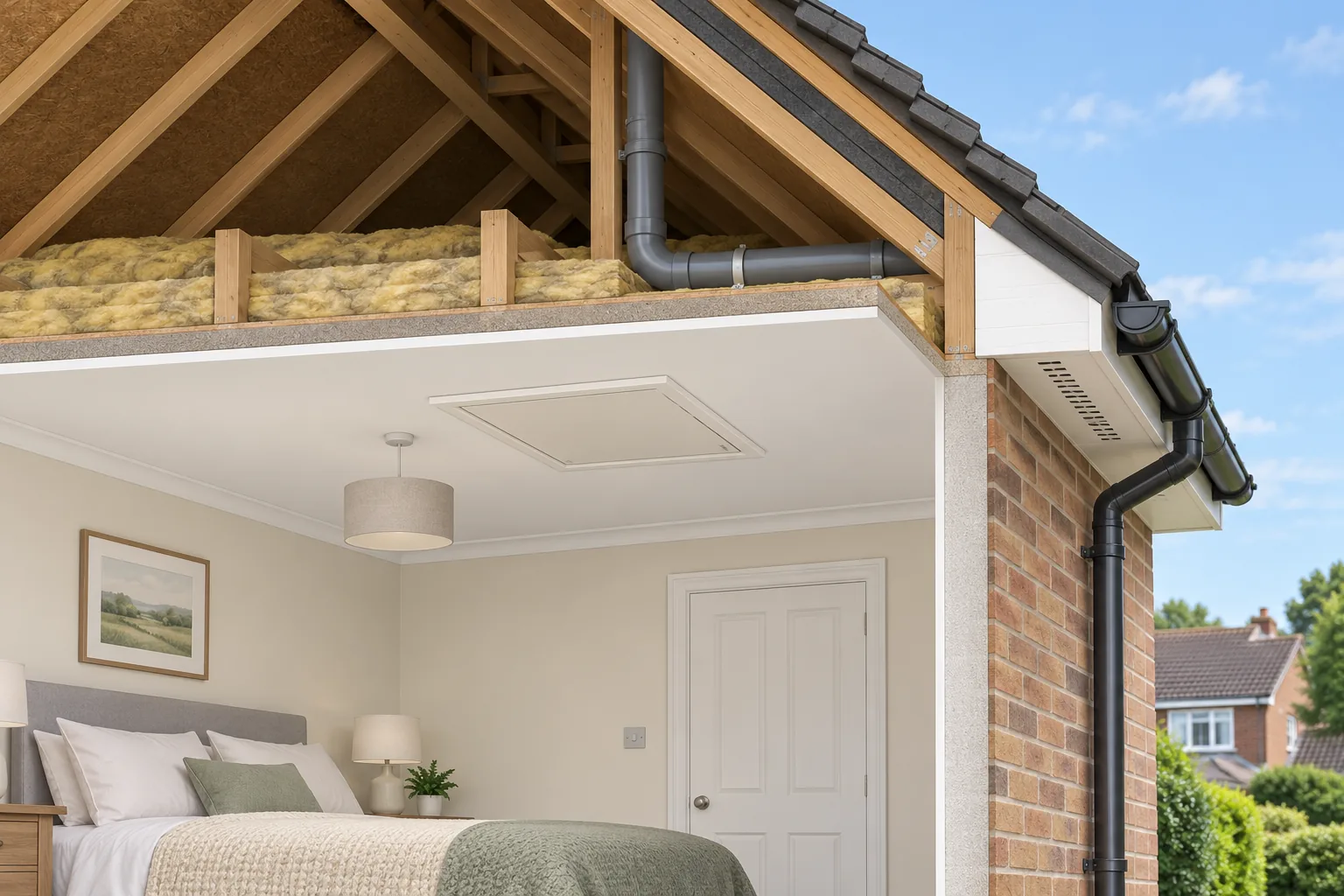
In daylight, examine the accessible outside of the building from ground level. You might note a damaged vent, a visible gap at an eave, displaced roof material or vegetation touching the roofline. Photograph the wider elevation as well as any visible detail. Avoid climbing on a roof or placing a ladder against an uncertain area to get a closer view. A distant photograph with a clear description of the position is often enough to guide a professional first visit.
If the property has an easily reached loft hatch, look at its immediate surroundings without forcing it open. Is there staining around it, debris below it or a visible gap in the closure? Do not stand beneath an unstable hatch, open it while holding a phone in one hand or enter a space without a safe walkway and proper lighting. A loft can contain fragile ceiling surfaces, electrical services and insulation. The need for a better look does not justify a fall or ceiling damage.
What might cause scratching above a ceiling?
Rodents are one possibility, particularly when repeated movement accompanies droppings, gnawing or signs near accessible access routes. Yet sound does not identify a rat or a mouse. Smaller and larger animals may be heard differently depending on the ceiling construction, and even a sizeable sound can be amplified by a hollow space. Visible evidence also needs careful interpretation. A photograph of a pellet may be useful to an inspector without proving that the sound and the pellet have the same source.
Other animals and non-animal causes should remain on the list until evidence narrows it. Birds may move near roof edges, while loose flashing, ductwork or a heating pipe can make intermittent noise as temperature or wind changes. If a noise follows the central heating cycle, tell the heating engineer or property manager that detail. If it follows dusk but not the heating, record that instead. Neither pattern is a diagnosis.
Where you have a sighting, photograph it without approaching or blocking an exit. Do not put poison, traps or improvised deterrents into an unseen ceiling void. You may be unable to retrieve an animal or check what else is affected, and the chosen action could complicate a proper inspection. Identification and a safe access plan come first.
Look for a second clue without disturbing it
An accessible cupboard under the suspected area, a utility space or the floor just below the hatch may reveal material worth noting. Photograph any pellets, gnawing or displaced insulation from a safe distance. Avoid touching suspected rodent waste, dry sweeping it or vacuuming it. Keep children and pets away from the area until you have reliable cleaning advice. If the material is in a food area, set aside anything that may have been contaminated.
Record absence as well as presence. “No visible debris below the hatch on two mornings” is a useful observation, though it does not rule out activity inside a concealed space. Do not tear into a ceiling or pull insulation aside merely to produce evidence. An inspector can decide what access is justified after reviewing the sound, location and visible clues.
An older guide on recognising early pest signs gives broader household context. For this particular problem, the priority is a dated noise log and any safely visible physical signs, not a long list of unrelated pest symptoms.
When to request a pest inspection
Repeated noises with visible droppings, gnawing or a confirmed sighting make a pest assessment more useful than continued guesswork. Tell the provider which room is affected, how to reach the loft hatch, what you have recorded and whether the roof or external wall is shared. Ask whether the visit can identify the likely source, check accessible routes and explain any access that would require a separate contractor.
If small rodent signs are found, the mice-control service is a relevant starting point for asking about inspection and entry routes. If larger evidence or a rat sighting is involved, the rat-control service describes the site's corresponding approach. Those pages are useful destinations because the next step depends on the evidence, not simply on how loud the noise sounded.
Where there is an immediate problem in an occupied room, or urgent access is needed after a clear sighting, explain that when asking about emergency pest-control availability. Availability and the appropriate response should be confirmed with the team; a sound by itself does not establish an emergency. If the more pressing sign is water, structural damage or exposed electrics, contact the relevant building professional as well.
Prepare the property for a useful visit
Make the affected room and any existing loft access reachable, but do not move heavy furniture or stored boxes alone. Share photographs and a short timeline. Mention earlier treatment, recent roof or plumbing work, and whether neighbours have reported similar sounds. In a rented or shared building, tell the person arranging access if permission is needed for communal roof spaces or service cupboards.
Ask the inspector to separate what was observed from what remains uncertain. A clear report might say that a gap is visible but that the route behind it has not yet been inspected. If further access is required, ask who will provide it and how the area will be left safe. If proofing is proposed, it should follow an understanding of current activity and the actual route; sealing an unconfirmed opening while an animal is still using a void can cause another problem.
Until the visit, keep the log going and avoid placing food or open pet feed in accessible storage areas. Do not assume the problem has gone because one night is quiet. Equally, do not treat every later building noise as proof that treatment failed. Repeatable observations, physical evidence and a considered inspection make the response proportionate.
The practical first step is simple: note the sound, check only what you can see safely, and pass that evidence to the right professional. It is enough to say “scratching above the back bedroom on three evenings” without trying to name the animal before anyone has inspected the space.