
Can rats enter through a drain? What householders can check
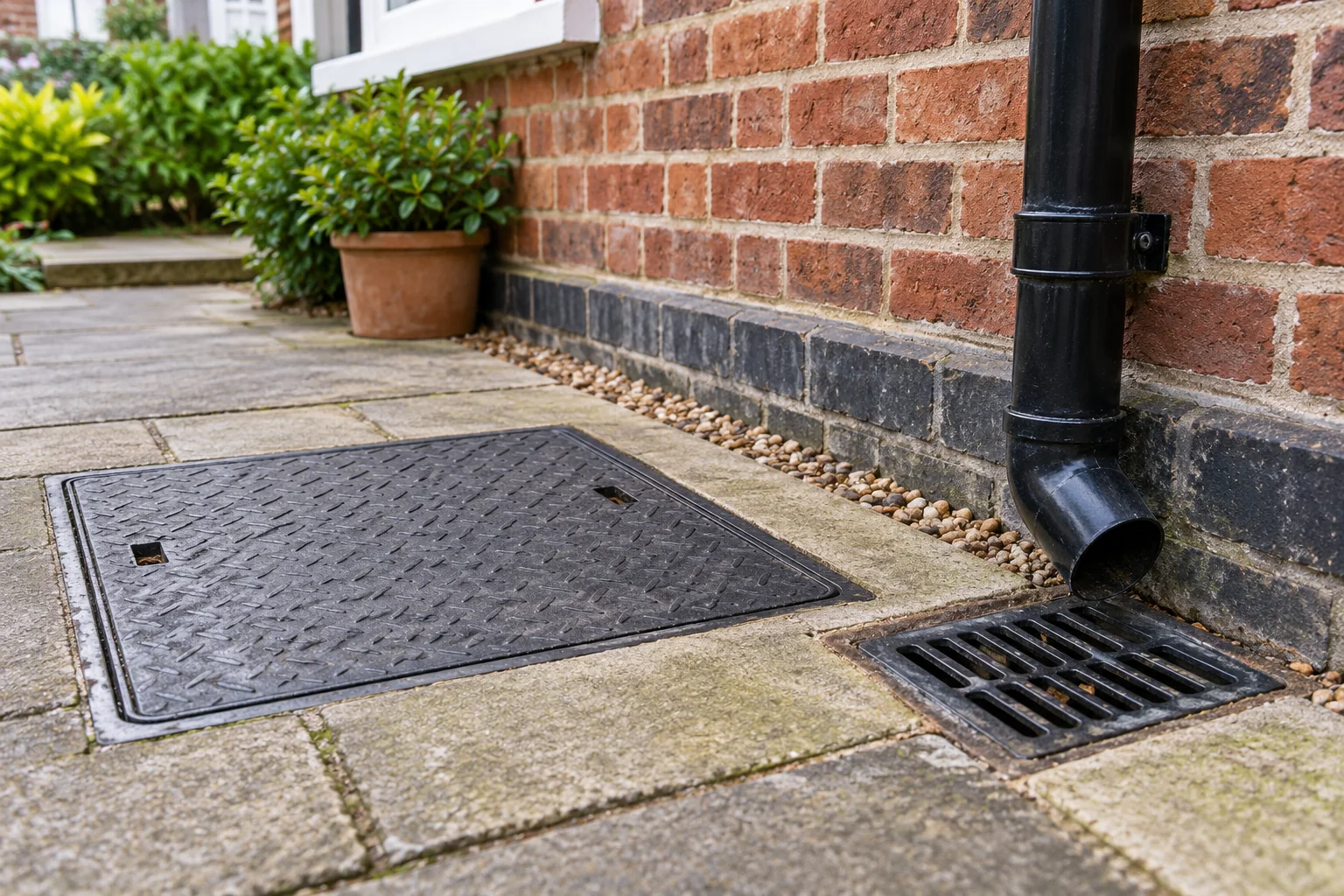
Rats can use underground routes, and defects in a drainage system may provide a way towards a building. That possibility deserves investigation when the evidence points there. It does not mean that a rat seen near a gully entered the house through a pipe. Drainage layouts, old repairs and hidden connections vary from property to property. A reliable answer comes from combining pest evidence with a suitable drainage assessment, not from lifting a cover and guessing.
Begin with the location of the sighting or noise. Was it outside beside a surface-water gully, inside a bathroom, under a kitchen unit or near a ground-floor service cupboard? Note the time, date and any associated smell, blockage or leak. These details help determine whether the first inspection should focus on a visible gap in the building fabric, a drainage defect or another route altogether.
How a drainage route could matter
A drainage system contains pipes, inspection chambers, junctions and connections that may have been altered during building work. Where a pipe is damaged, a joint is open or an unused connection is poorly sealed, an animal may be able to move through the surrounding ground or reach a void. A defect can also let wastewater escape, creating a separate hygiene and structural concern. The presence of a drain is normal; the condition of the route is what needs checking.
Some properties have older runs whose plans are incomplete. A drain close to a wall may look like the obvious explanation for an indoor sighting, while an overlooked gap around a cable or a door threshold is the actual entry point. Conversely, sealing a visible wall gap does little if a damaged underground connection remains. An inspection should test the plausible routes rather than assume the first one noticed is the cause.
The type of drain also matters. Rainwater gullies, foul-water pipes and surface channels serve different purposes. Do not remove a cover or put a hand into an opening to identify it. If the cover is damaged or loose, keep people away and contact the person responsible for maintenance. A drainage contractor can establish the layout and condition with suitable equipment where needed.
Which drainage clues are useful?
Record a repeated sighting around the same gully or cover, disturbed material near a pipe entry, or a persistent odour that coincides with a blockage. Photograph the area from ground level without standing over an unstable cover. If water backs up or escapes, record when it occurs and stop using affected fixtures if advised by a plumber or drainage specialist. Do not interpret every wet patch after rain as a pipe defect.
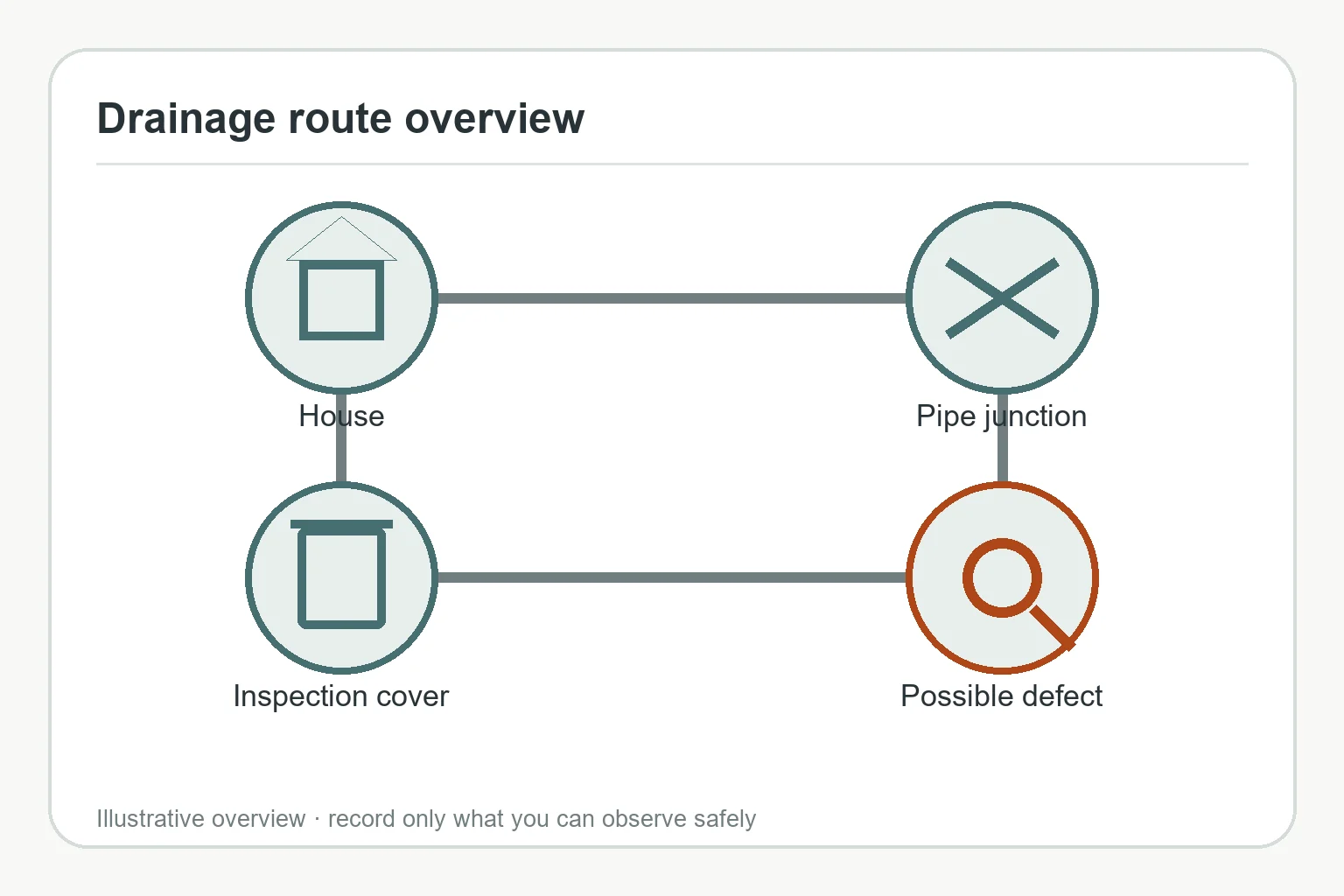
Inside, note any accessible gap around a waste pipe, especially where it passes through a floor or wall. A clean photograph showing the whole cupboard or room is more useful than a close-up that hides its location. Do not dismantle a toilet, pull out fitted cabinets or pry up floorboards in search of a route. These tasks can create leaks and expose services; they should be planned with the right professional.
Keep a dated log of sightings, noises and changes to water flow. If the only sign is a rat outside, the problem may be associated with bins, vegetation or neighbouring land rather than the drain. The rat-control service is a useful starting point for discussing the pest evidence and asking whether drainage should be included in the assessment.
What a pest inspection can establish
A pest technician can assess signs such as droppings, runs, gnawing and sightings, then inspect accessible entry points around the building. They can explain whether the pattern points towards a drain, an above-ground gap or an unresolved source. Ask what they actually observed and which areas were inaccessible. A suspected drain route should be described as a hypothesis until it has been checked appropriately.
Where drainage is genuinely implicated, a specialist may need to trace the pipework or inspect it with a camera. That work can identify a broken joint, redundant connection or other defect; the pest inspection alone may not reveal the condition of an underground pipe. Ask how the two findings will be coordinated, who arranges repairs and when proofing should occur. A repair should address the defective route, while the pest plan should address active animals and monitoring.
Avoid treating a quote for pest work as if it automatically includes drainage investigation or construction repairs. Ask for the scope in writing. The site's pest-proofing page is relevant once a route is identified and a suitable exclusion step can be planned. Depending on the defect, a qualified drainage contractor may still be required.
What not to do with a suspected drain entry
Do not pour poison, bleach or other chemicals into drains in an attempt to remove rats. Such actions are unsafe, may damage a system and are unlikely to establish the route. Do not block a functioning drainage pipe or vent; a blockage can force water elsewhere. A homemade cover over a gully may also prevent drainage or conceal a fault.
Lifting inspection covers without the right tools and precautions carries risk, particularly around traffic, heavy covers and potentially contaminated water. Children and pets should not be brought to watch. If a cover is already broken, secure the area as best you safely can and tell the relevant property manager or contractor. If sewage is backing up or escaping, treat that as a drainage problem needing prompt attention regardless of whether rats are involved.
An older article on general rodent prevention discusses household food and access points. Drain suspicion is narrower: it calls for route evidence and, where warranted, investigation of the physical pipe condition. Ordinary housekeeping can reduce attraction, but it cannot repair an underground defect.
Shared and rented buildings need coordination
In a block or terrace, pipes and chambers may serve more than one home. Tell the landlord, managing agent or responsible owner which drain and room are affected, using dates and photographs. Avoid stating that a neighbour caused the problem or that their pipe is at fault. The route may cross boundaries or connect to shared infrastructure, so access permissions can matter as much as the initial pest finding.
If previous drain work was carried out, provide any paperwork or known dates. A note that a kitchen extension was built five years ago is useful context, but it is not proof that the new work failed. Ask the inspector which further records or access would help. A neutral, factual log makes it easier for several parties to coordinate without arguing over an unverified cause.
Where an indoor sighting occurs alongside a blocked drain, mention both concerns when requesting help. The emergency pest-control page explains how to ask about urgent pest assistance, while a drainage contractor may need to attend the water issue separately. Confirm availability rather than assuming one visit will resolve both trades' work.
A useful sequence for resolving the question
First, record the precise pest and drainage signs without disturbing the system. Second, arrange a pest inspection that considers more than the nearby drain. Third, if the evidence points underground, have the relevant section of drainage assessed by someone equipped to do so. Finally, agree treatment, repairs and proofing in an order that avoids sealing an active route prematurely.
Ask for the outcome of each step in plain language: what was seen, what remains uncertain and what should be checked next. If the drain proves sound, that result is useful because it redirects attention to other access points. If a defect is found, a repair plan can target the actual opening. The question “Can rats enter through a drain?” has a general yes, but your property needs its own evidence before anyone can say that they did.