
Rat or mouse droppings: how to tell the difference
Finding small, dark pellets in a cupboard or beside a skirting board is unsettling. Size can help you decide whether you may be looking at mouse or rat droppings, but it does not settle the question by itself. Pellets can be old, broken or mixed with other debris. Their position and other signs in the room matter just as much.
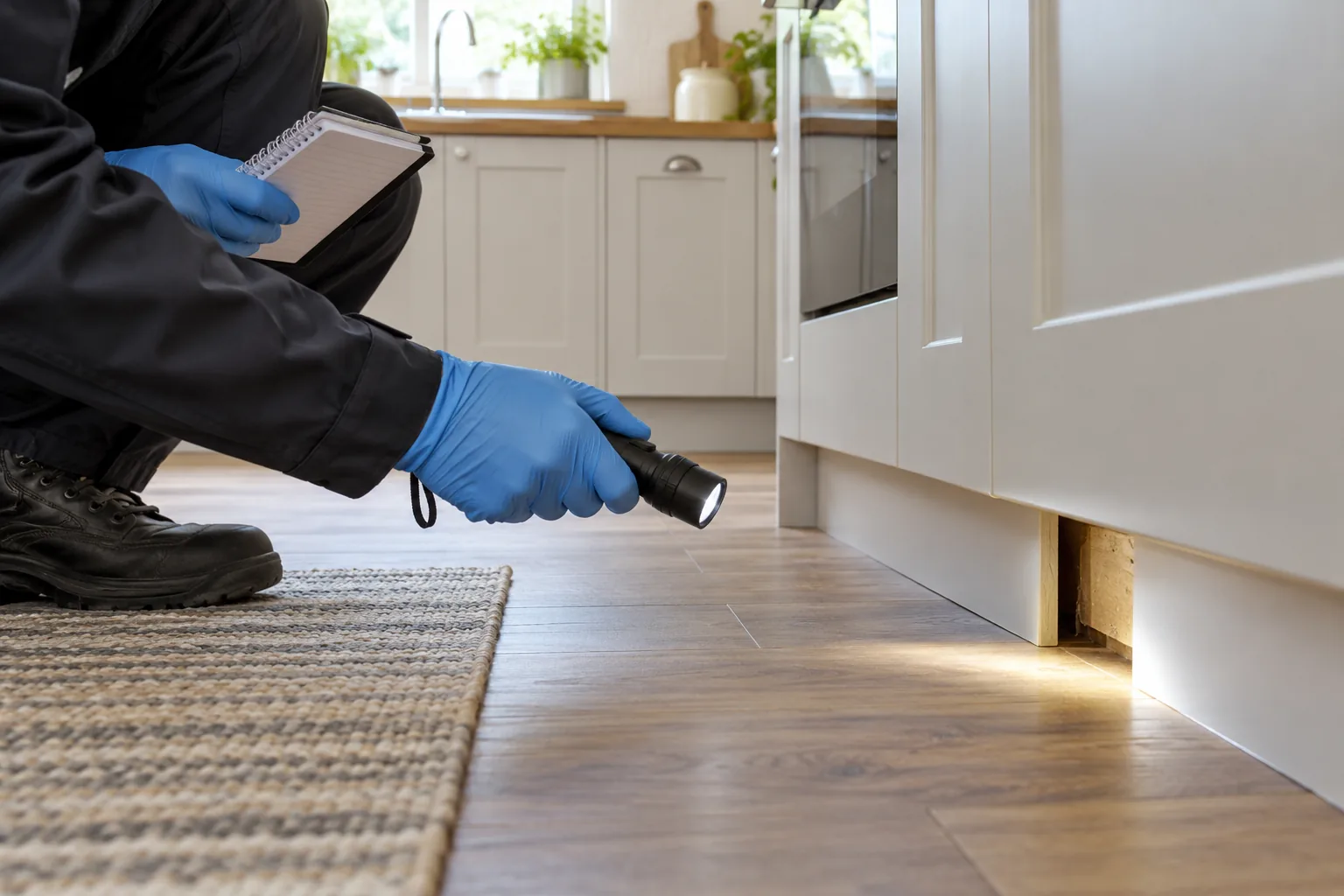
Start by leaving the material undisturbed. Take a clear photograph from a safe distance, note where you found it and look for other clues without pulling apart inaccessible spaces. The aim is to give an inspector useful evidence while avoiding unnecessary contact with potentially contaminated material.
The broad difference in size and shape
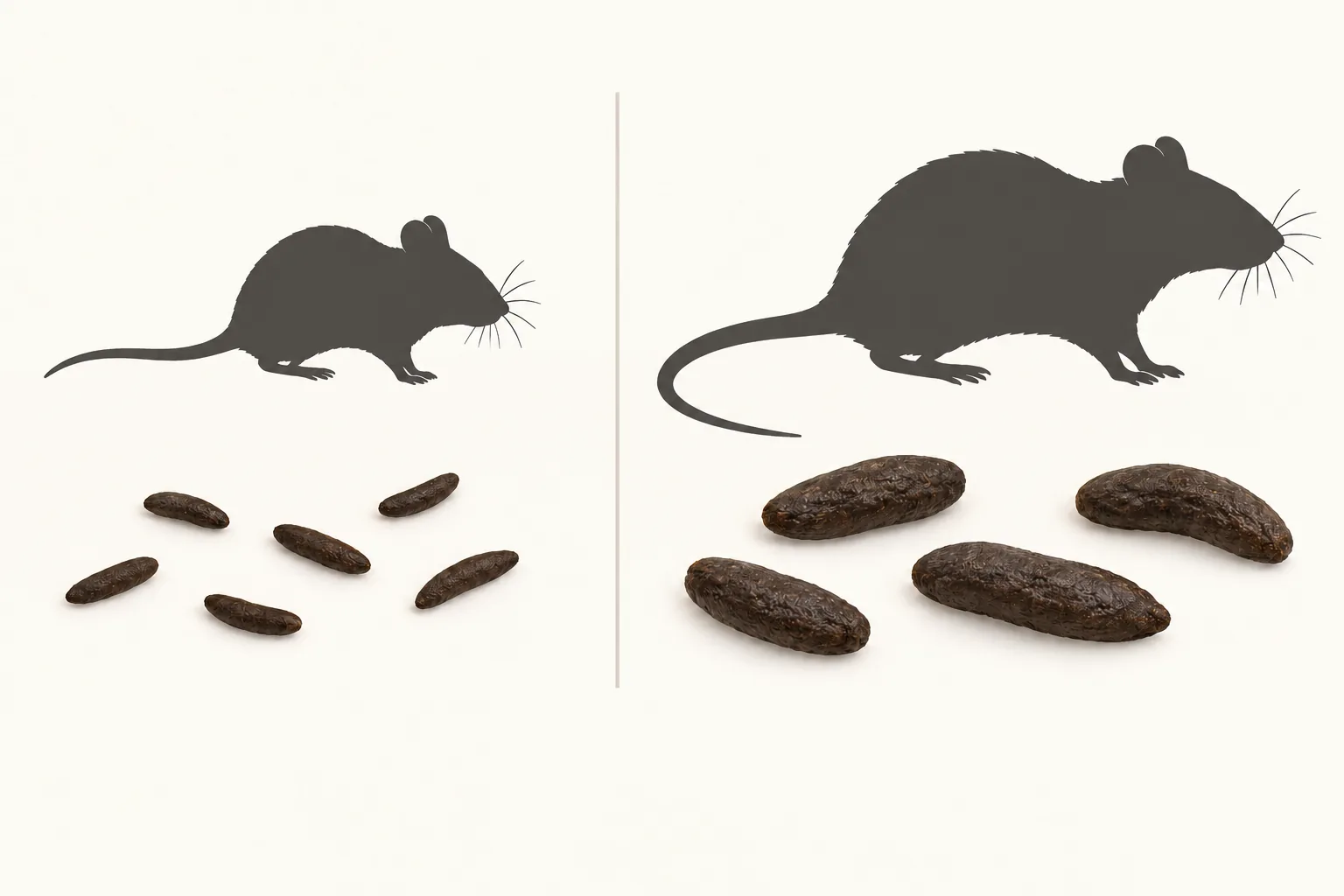
Mouse droppings are generally smaller and slimmer, often described as rice-like with pointed ends. Rat droppings are usually longer and thicker. The British Pest Control Association gives approximate examples of 5 mm for a typical mouse dropping and 10 mm for a rat dropping, while its fuller comparison notes that appearance varies. Treat those figures as orientation, not a test with a pass mark. A photograph with an everyday object nearby for scale is more useful than trying to measure or handle a pellet.
Colour also has limits. Both kinds may look dark brown or black. A pale or dusty-looking pellet may be older, but colour alone cannot reliably establish when an animal was present. A damp surface or poor lighting can change its appearance. Avoid calling a problem active or resolved on the basis of one pellet's colour.
Shape can narrow the possibilities, especially when several similar pellets are found together. Yet insect cases, seeds and other debris are sometimes mistaken for rodent waste. If the shape is unclear, photograph it and describe it as unidentified material. You do not need to make a firm identification before requesting help.
Location gives the observation more meaning
A pellet in a kitchen cupboard raises different questions from one found in a loft. Note the precise place: along the rear edge of a shelf, beside a pipe, under an appliance or near a door. If you can see a route between the finding and a gap, photograph both without disturbing the material. This helps an inspector consider how an animal might be moving through the property.
Do not assume that a rat found outside could not reach an indoor cupboard, or that a small gap proves mice. Buildings have connected voids and service routes that are not visible from one room. Likewise, material carried on a shoe or stored item may not reflect activity at the place where you finally noticed it.
Look for a pattern rather than a single isolated find. Repeated pellets in the same area, gnawed packaging or a regular scratching sound may support the case for rodent activity. They still do not establish species on their own. The general guide on noticing pest signs before a problem spreads covers broader clues; this article focuses on what the pellets themselves can tell you.
What to record without touching anything
A short log can make a first call more productive. Record the date and room, the exact surface or edge where the pellets appeared, and whether you have seen more in the same place on another day. If there is a visible gap, note its position without probing it. Add any noises, sightings or damaged food packaging, including when they occurred.
Photograph the wider setting first, then take a closer image. Keep enough of the cupboard, skirting or appliance in frame so someone else can understand the location. A separate close-up can show shape. Use the phone's normal camera; a digitally enlarged image may blur important details. If the material is in an area used for food, keep people and pets away from it until you can deal with it safely.
Avoid disturbing suspected nests, moving heavy appliances alone or opening sealed building voids just to gather evidence. The information needed for an inspection is usually available from accessible areas and a careful description of what you have noticed. If you rent or share a property, keep the log factual so it can be passed to the person arranging access.
Handle suspected rodent waste carefully
Rodent waste should not be swept or vacuumed while dry. UK Health Security Agency guidance warns that this can put infectious material into the air. Wear gloves, dampen or lift small amounts with a wet wipe or damp kitchen towel, bag the waste, clean and disinfect the affected surface, and wash your hands afterwards. Follow the product instructions for any cleaner or disinfectant. Do not mix cleaning chemicals.
That public guidance is written for contact with pet rodents and their waste, but its advice to avoid dry sweeping or vacuuming is a prudent starting point when the material may come from wild rodents too. If contamination is extensive, in an awkward void, near exposed food or beyond what you can handle safely, ask the pest-control provider how to arrange cleaning. Do not treat a home vacuum cleaner as a way to remove material from insulation or cavities.
The NHS notes that leptospirosis is rare in the UK and is associated with exposure to urine from infected animals, including rodents. That is a reason for sensible hygiene, not a basis for diagnosing illness from the sight of droppings. If you are unwell after a possible exposure, use the NHS guidance or speak to a clinician and describe the exposure accurately.
When the evidence suggests mice
Several small, slim pellets near food storage or a kitchen service gap may make mice a reasonable possibility. Look from a distance for gnawed packaging or signs beside pipe entries. Keep food in sound containers and set aside packages that may have been contaminated. Do not place suspected waste or exposed food back into normal storage.
If activity seems to continue, ask what a mice-control inspection would cover. The useful question is not only which animal left the pellets, but where it is gaining access and whether neighbouring voids need checking. A separate existing guide to proofing a home against mice discusses entry points more broadly. Its general advice should be checked against the specific findings in your property.
When the evidence suggests rats
Larger, thicker pellets together with other signs may point towards rats. Note any sightings outdoors, activity around bins or sounds close to an external wall. Those details are more useful than an attempt to identify a species by colour. Rats can use routes that are not obvious from the room where you found the evidence, so an inspection may need to consider the building exterior and nearby service points.
The rat-control page explains the site's inspection-led approach. When you call, describe the room, date, visible access points and any previous treatment. Ask whether the proposed visit includes identifying the animal, checking entry routes and discussing prevention. Do not seal a suspected active route or disturb a burrow before advice if doing so could simply redirect activity into another space.
What an inspection should resolve
A competent inspection should move beyond a guess based on pellet size. It should consider where activity is occurring, what other evidence is present, whether food or water is available, and how the animal could enter or move through the property. The technician can then explain the likely identification, what remains uncertain and which next steps suit the property.
Ask how findings will be documented and what the quote includes. If a treatment is proposed, clarify access, preparation, follow-up and any separate proofing work. There is no need to promise an exact number of visits or an outcome before the source and extent of activity are understood. A clear answer about uncertainty is more valuable than a confident label attached to a blurry photograph.
For now, preserve a useful record, protect food areas and avoid dry cleaning methods that scatter suspect material. Small pellets often suggest mice and larger ones may suggest rats, but the pattern of evidence and the property inspection determine the practical response.